
It’s 5:30 PM on a Thursday. The message lands: “Pub?”
You glance at it. You’ve done ten hours. You haven’t eaten lunch. You’ve got a 9 AM start tomorrow. And you know, with absolute certainty, that if you go, you’ll be home at 11 PM tipsy, exhausted, and resentful of the entire concept of ‘team bonding’.
You also know that if you don’t go, you’ll miss the conversation. The bit where the senior person decides who they like. The casual chat that decides who gets the next project. The ‘networking’ that, for decades, has happened over a fifth glass of wine you didn’t actually want.
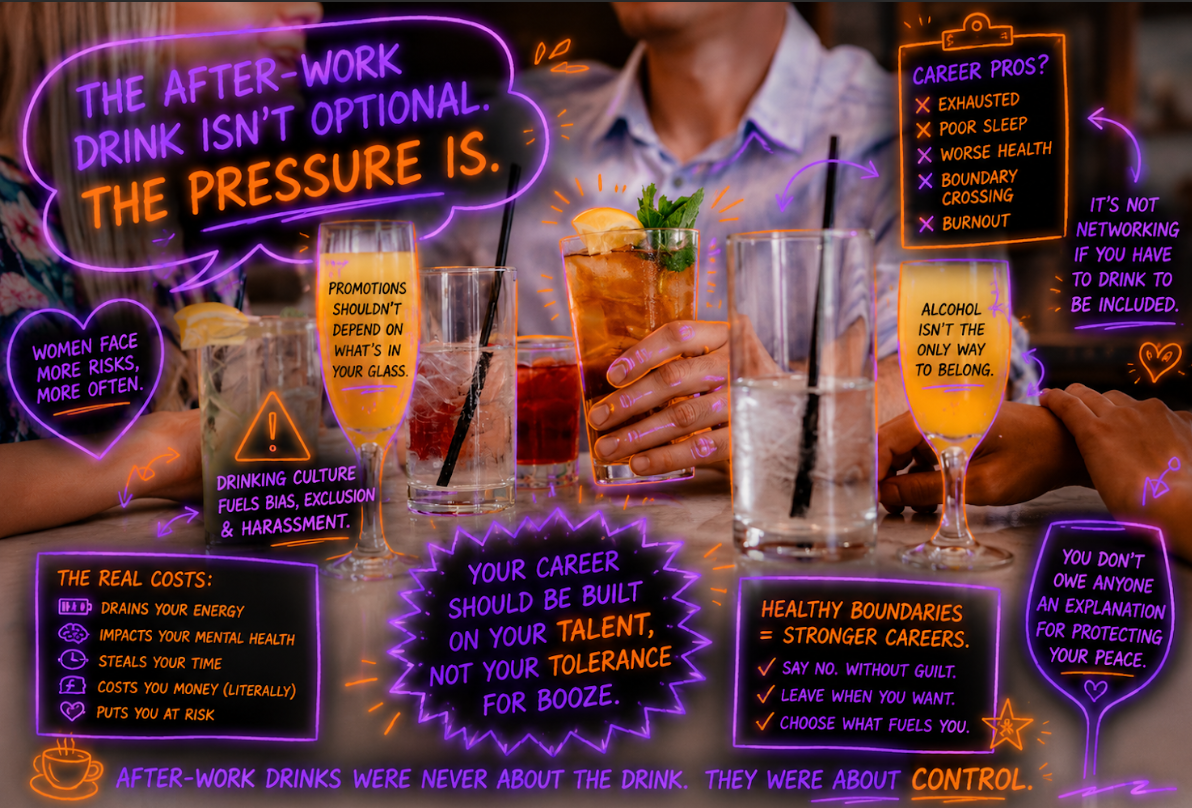
Welcome to workplace drinking culture: a system designed to look optional whilst quietly deciding who gets ahead.
But here’s the shift nobody saw coming. Women, particularly women in their 20s and 30s, are quietly opting out. And the after-work pint is dying because of it.
To understand why women are walking away, you have to understand why we were ever there in the first place.
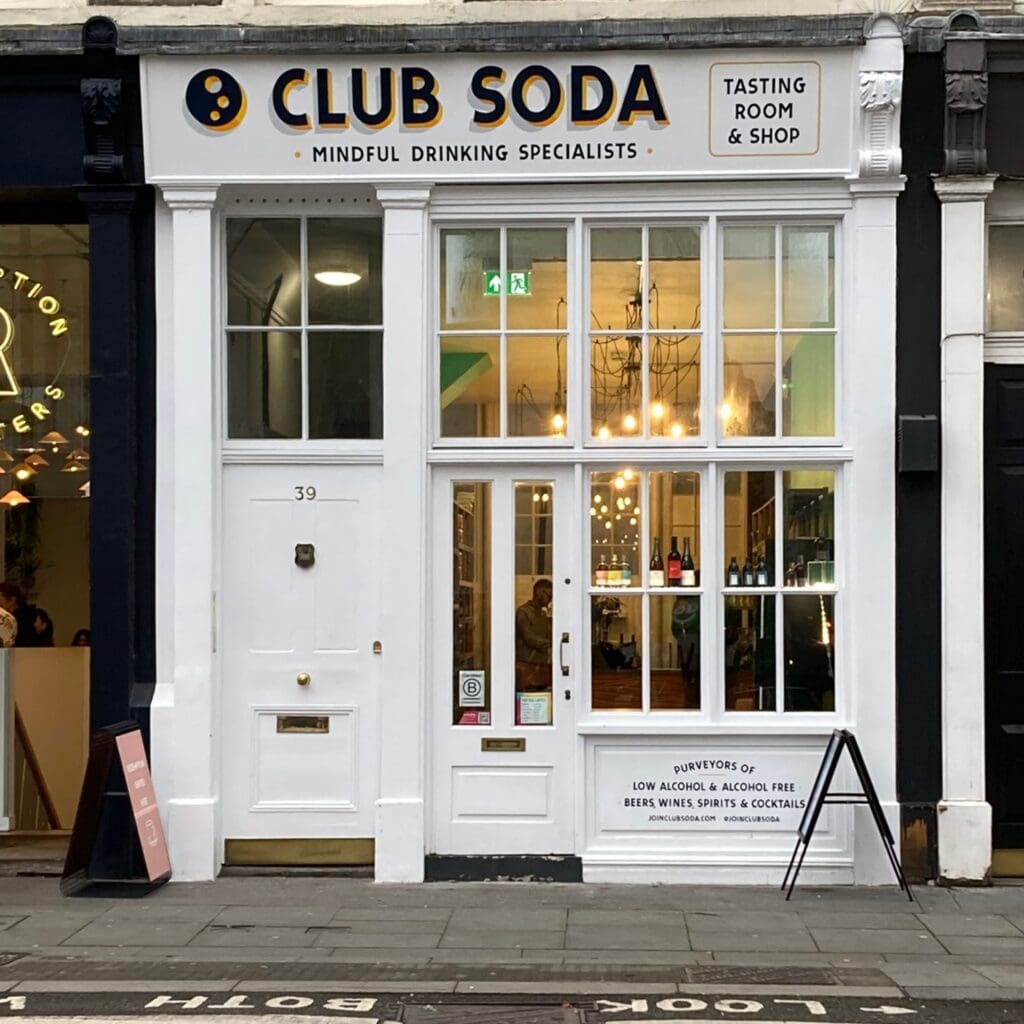
Laura Willoughby MBE, founder of Club Soda, has spent over a decade tracking women’s relationship with alcohol. And her take on how women ended up at the centre of UK drinking culture is fucking damning.
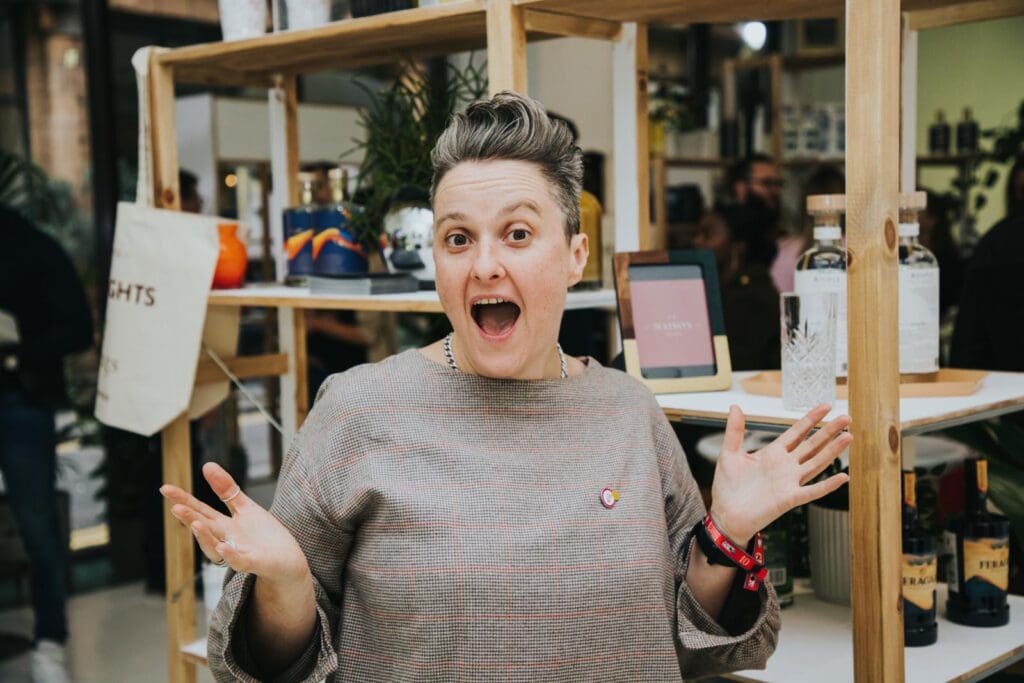
“My generation of women are the biggest drinking generation of women there’s ever been,” Willoughby says. “We’ve drunk more than any other generation of women.”
She’s not exaggerating. The late 80s and 90s was a perfect storm: women entered the workforce in unprecedented numbers, cheap supermarket wine flooded the UK, and socialising became mixed gender for the first time. Suddenly, women were drinking alongside men, with men, like men, to keep up with men.
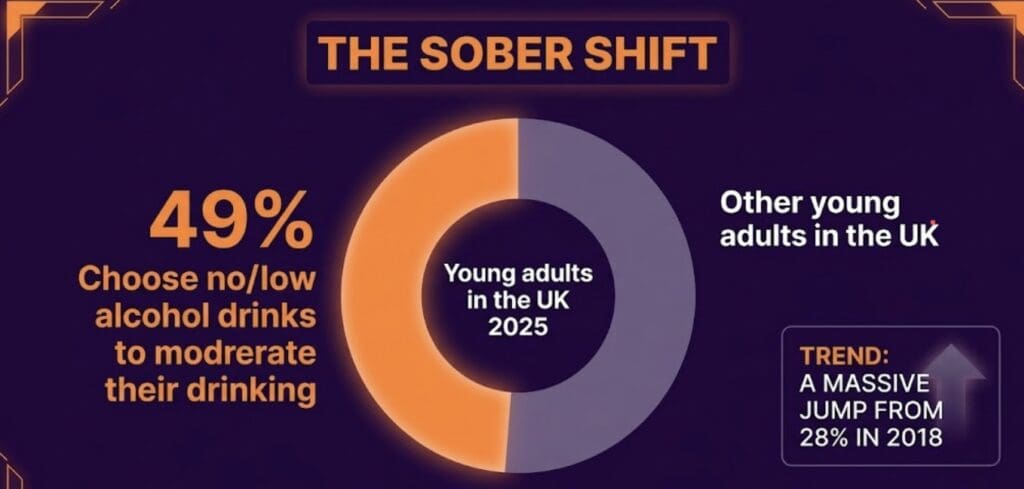
And the numbers show the shift away has begun. According to Drinkaware’s 2025 report, 49% of young adults in the UK now choose no/low alcohol drinks to moderate their drinking, up from 28% in 2018.
“More women entering the workforce and so feeling that they had to socialise after work in order to get on,” Willoughby explains. “Because you had to do what the lads did.”
Translation: equality came with a bar tab. Welcome to the workforce, here’s your Pinot Grigio, please ignore the fact you’ll need it just to survive being the only woman in the room.
And the wine industry knew exactly what it was doing. “Wine is sweet and still and high strength, so it appeals very much to women to drink,” Willoughby says. “It also comes in a bottle that begs you to finish it.”
Guilt tripped by a wine bottle. Fucking brilliant.
So, the generation, the biggest-drinking generation of women ever, raised daughters. And those daughters have been watching.
“What’s really interesting about the 20s-30s generation is they set more boundaries around what’s acceptable and what’s not,” Willoughby says. “We were taught that if you are anxious, you should just drink more. Whereas young people are far more aware of mental health and the things that impact on your mental health. And of course, alcohol is one of them.”
Then she says the line that should be on a poster somewhere: “They’re teaching us about that rather than the other way around.”
We see a generation who were sold wine as their reward being taught by their own daughters that the wine was the punishment.
This isn’t a wellness trend. It’s not a fad. It’s an entire generation of women looking at what alcohol cost their mothers, the health, the mental wellbeing, the sleep, the safety, and quietly deciding: no thanks. Not for me.
Fucking finally.
The after-work pint isn’t just dying because women are saying no. It’s dying because workplaces are finally being forced to listen.
“It’s no longer considered acceptable to put pressure on your colleagues to come and drink as part of getting on at work,” Willoughby says.
Three things broke the spell:
One: Younger women came in and refused to play. “Younger people coming into trainee schemes have made it very clear that that sort of behaviour is not acceptable.”
Two: Willoughby has seen how diversity caught up. Not everyone drinks, for reasons ranging from religion to pregnancy to the school run. Forcing everyone to participate in drinking culture stopped being remotely defensible.
Three (the bit nobody talks about): “Alcohol and sexual harassment go hand in hand. The more people drink, the more they behave out of character or inappropriately. And workplaces don’t want that sort of problem anymore.”
There it is. The unspoken truth of workplace drinking culture. Lloyds of London famously banned lunchtime drinking. It wasn’t about productivity. It was about sexual harassment.
It sounds dramatic, but workplace culture is genuinely outdated. Society has changed. The people have changed. The expectations have changed. The only thing that hasn’t is the bar tab.
For decades, women navigated workplace cultures where saying no to drinks meant being excluded from the rooms where decisions got made. And those drinking cultures didn’t just damage their health. For many women, they were actively unsafe.
When women started walking away, they weren’t being bloody prudish. They refused to keep paying the alcohol tax to be in the room.
The industry has noticed, because it had to.
“I speak to venues now that 40% of their menu is now alcohol-free,” Willoughby says. “They make sure there are products for everybody. So, you don’t feel like drinking is compulsory. It’s about the social element. It’s not about drinking alcohol.”
When corporations book Christmas parties now, they’re asking about non-alcoholic options. Venues without proper no/low menus don’t get the booking. The industry isn’t changing because it’s nice. It’s changing because women voted with their wallets and the spreadsheets noticed.
That’s how culture actually shifts. Not in articles like this one. In bookings. In sales figures. In the moment Lucky Saint outsold Heineken at one specific venue and someone in marketing realised the game had changed.
If you’re the one staring at that ‘Pub?’ message right now, wondering whether you can professionally afford to say no, Willoughby has clear advice.
“You should have a lot of policies at work around bullying and harassment and work-life balance. Pull those policies. Alcohol does apply in all of those settings. If someone’s putting you under pressure to drink from work, that is workplace bullying.”
Read that twice. Pressure to drink from work is workplace bullying. Not ‘not fitting in’. Not ‘being difficult’. Not ‘being awkward at the work do’.
Her practical reframe is brilliant: position it as a health goal. “Look, you’re doing a marathon, you’re doing this fitness thing, or you’re trying to have kids. I’ve made this decision for me, for my health goals. I really happily support you in your health goals. But I’d really appreciate it if you didn’t put me under pressure to drink.”
Still go. Still order something. Still be in the room. Refuse the peer pressure.
The after-work pint isn’t dying because women suddenly stopped enjoying themselves. It’s dying because we finally noticed what it was costing us.
The Friday nights are blurring into one. The Sunday mornings start with shame. The networking events we never actually wanted to be at. The promotions that hinged on whether we could keep up with the lads at the bar.
For decades, women were sold a story that drinking was liberation. As Willoughby puts it: “There’s loads more people not drinking around you than you ever imagined. They just don’t say very much.”
Silent revolution.
More and more women are looking at the after-work drinks message, weighing the cost, and quietly typing back: ‘Not tonight’.