

“Don’t shit where you eat.”
It’s one of those pieces of dating advice that gets handed down like an unquestionable life rule, alongside “never text first” and “play hard to get”.
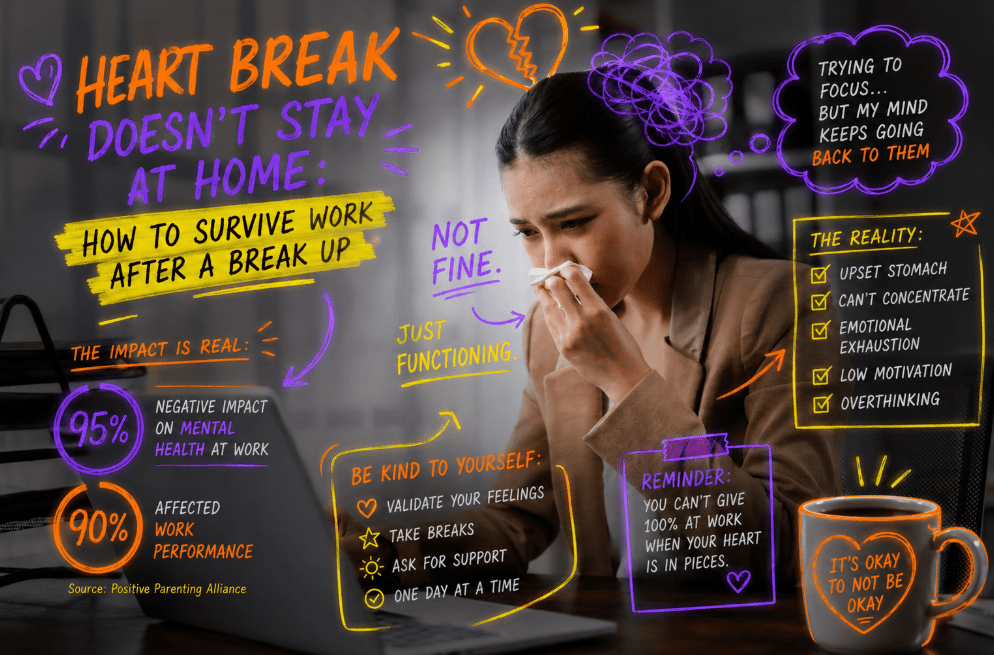
But despite this holy grail advice, 1/3 workers have had a relationship with a coworker. So is it time to retire this old sentiment in 2026?
Because between demanding careers, burnout, rising living costs and the general exhaustion of being alive, many of us barely have enough energy to answer our friends’ WhatsApps, never mind embark on an active search for a life partner.
And if work is where we’re spending most of our waking hours, is it really that surprising that romance keeps showing up in the office?
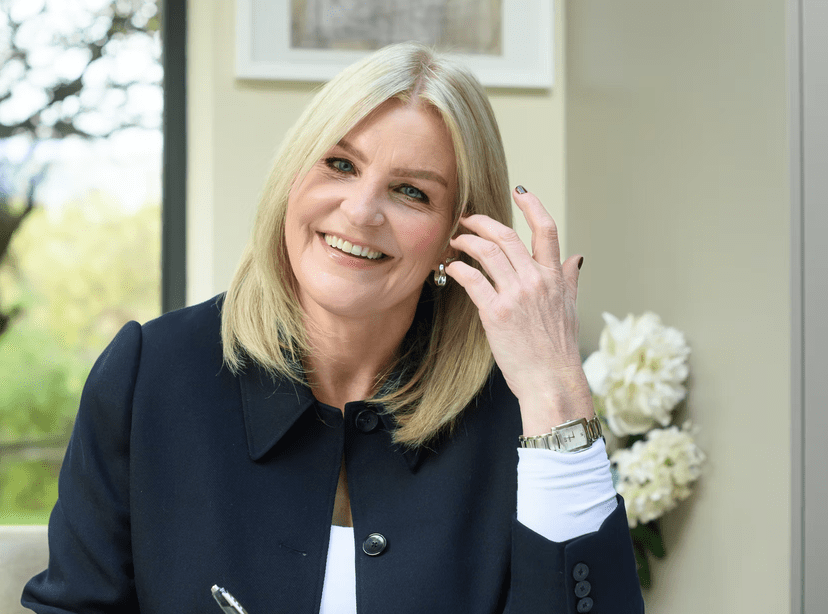
“Adults now spend a lot of hours with their work colleagues, probably more so than anyone else,” relationship and divorce coach, Vanessa White says.
It’s one of the reasons she believes the advice is starting to feel outdated. The way we work, socialise and date has changed dramatically, but the rules haven’t quite caught up.
“Before, we kind of left work at five. We had much stronger local communities. We lived closer to people we knew. We’d go to the local pub, a dance class or the gym,” she says. “I think we had larger friendship networks in real life than we do now.”
Today’s reality looks very different. In a study by Tinder, 94% of women agreed that dating has become more difficult in recent years.
“We either work from home or we do things further away from where we live,” White says. “Adults now spend a lot of hours with their work colleagues, probably more so than anyone else.”
Which raises an obvious question: if work is where we spend most of our time, why wouldn’t it also be where we meet potential partners?

For 30-year-old Leena Wilkinson, work turned out to be exactly where she met her partner.
In 2018, she attended a job interview where one of the interviewers immediately caught her eye.
“I was like, ‘Well, this guy’s cute,'” she says.
“But I really needed a job, so I was just professional.”
After successfully landing the role, the pair got to know each other gradually through work.
“I found myself, if I was ever stuck, going to him for help because I thought it was a good excuse to talk to him.”
Then on a work night out, “we ended up kissing outside the pub,” she says.
“I then threw up on him.”
Not exactly a conventional love story.
But it worked.
The couple have now been together for almost eight years.
The reality is that many people aren’t avoiding dating outside of work because they want to. They’re avoiding it because they’re exhausted.
“We only have so much energy,” White says. “If you’ve had a ten-hour working day, the idea of going out to meet someone from scratch for a drink for an hour feels like the last thing you want to do.”
Burnout doesn’t just affect our performance at work. It affects how much capacity we have left for everything else.
“People aren’t necessarily choosing workplace relationships,” White says. “Sometimes there is just no scope or energy elsewhere.”
For younger workers especially, the pressure can feel intense.
Research has found that 60% of single women are looking for some type of relationship. Which, when they have no fucking time to date, is a bit of a problem.
“There is a lot of pressure on young women,” says White. “Like ‘I’ve got to meet someone.'”
Part of the appeal of workplace relationships is that they remove some of the guesswork that comes with traditional dating.
“You see what their humour is like. You see what they’re like under pressure. You see how they handle stress, how they communicate,” White says.
“Their values very often come out at work in how they handle their work, how reliable they are, what their ambition and drive is like, and how they treat other people.”
Those observations can tell you a lot more than a carefully curated dating profile ever could.
It’s essentially months of background checking without the effort.
For Leena, getting to know her partner before dating him ended up being the driving force of their romance.
“I definitely saw a different side to him from working with him than perhaps if we’d just met on a dating app,” she says.
The pair worked in a customer-facing environment, meaning she got to watch how he handled pressure before they ever went on a date.
“If I had a difficult customer or needed somebody higher up to help me with something, I was able to see him in action,” she says.
The same relationship skills that make somebody a good colleague often overlap with the qualities that make someone a good partner.
“The pillars of healthy relationships are communication, trust, authenticity, respect, collaboration and effort,” says White.
“You can see quite a lot of those by observing somebody at work.”
White believes that, in some cases, dating someone from work can actually provide an additional layer of support.
“There are definite advantages,” she says.Particularly when you’re dealing with workplace stress, having a partner who understands your environment can make a significant difference.
“It allows you to have that empathy and understanding. You know who they’re talking about if they’re talking about Joe in HR. You know what they mean.”
Leena found that support particularly valuable when it came to career progression.
“He had done the job that I was in before,” she says. “It was easier for him to help me prep for interviews and support me because he knew what the organisation was looking for.”
That doesn’t mean workplace romances are completely risk-free.
White is quick to point out that the real issue isn’t the relationship itself, but the dynamics surrounding it.
“If you’ve got two consenting adults meeting through work, that isn’t inherently problematic,” she says.
“The concern is when a relationship creates unfairness, conflicts of interest or workplace disruption.”
For that reason, she believes employees should pay particular attention to power imbalances and workplace policies before pursuing a relationship with a colleague.
Despite this, eight years later, Leena has no regrets about taking the risk.
“If you like someone and you think they’re worth the risk, then go for it.”
Maybe “don’t shit where you eat” made sense when work finished at five and our social lives existed somewhere beyond the office walls. But for a generation navigating burnout, packed schedules and increasingly blurred boundaries between work and life, it might be time for a more realistic rule.
Proceed thoughtfully. Date responsibly. But don’t automatically write off the people sitting a few desks away.