
Tee Danielle had been bouncing her right leg for thirty minutes.
She hadn’t wanted to come to this after-work dinner and knew, going in, that she wouldn’t enjoy it.
She, however, also knew that not showing up would brand her as unfriendly or uninterested in her job.
So, sat in a poorly lit restaurant on a Wednesday evening, pulling at a loose thread on her sweater, she performed the cheery, outgoing version of herself that her workplace seemed to require.
And it was, as it always is, fucking miserable.
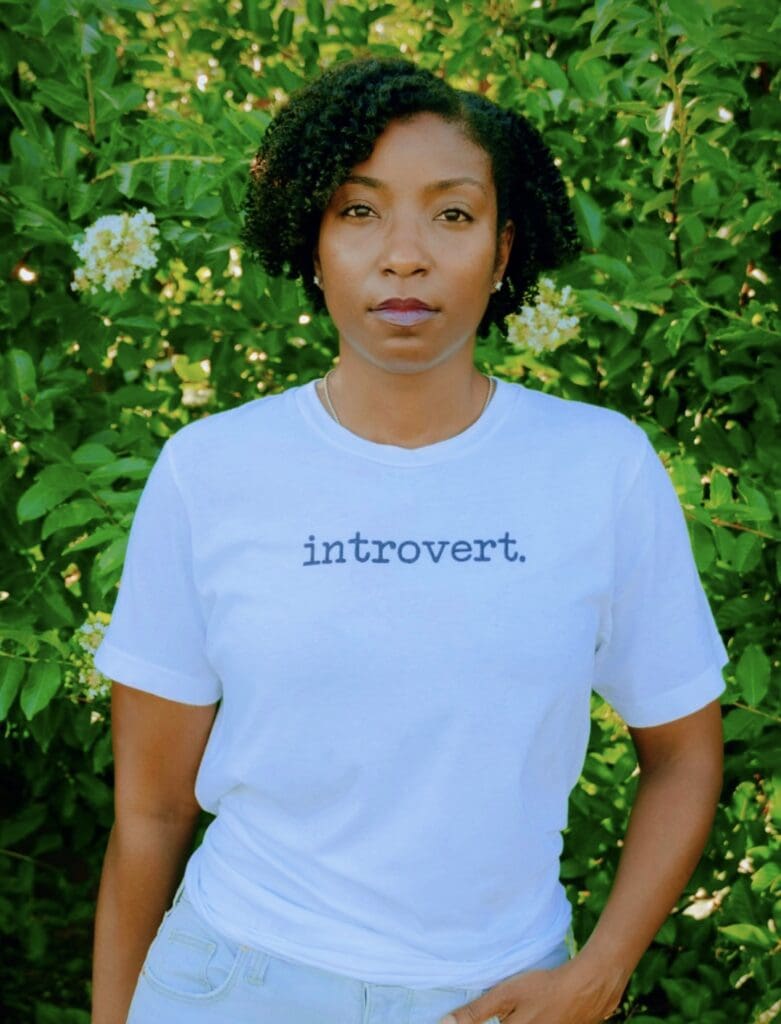
“I felt like I had been ‘on’ for hours, small talk, ice breakers, and somewhere in the middle of it, I mentally checked out. It’s the kind of tired that comes from being observed for hours at a time when all you want is a quiet moment to yourself. I went home that night and didn’t speak for the rest of the evening,” says Tee, a U.S.-based content creator who spent several years in a client-facing professional role. “In general, declining to go to events felt like a test of whether you were fully invested or not; the social cost of skipping was higher than the cost of attending, but whatever you spend managing how you’re perceived has to come from somewhere.”
According to research by Dr Jeremy Sutton, roughly 50% of the workforce is introverted.
The workplace, meanwhile, seems to have been built almost entirely for the other half, and keeping up is exhausting in ways that aren’t often named.
“My introversion was treated like it was something to fix. Quiet women get read as stand-offish, even when they’re just listening,” Tee says. “So, you adapt. The pressure isn’t always spoken, but it’s palpable; you feel it in the air. The cost shows up later, at home, when there’s nothing left for anyone else.”
Nancy Ancowitz is a career strategist specialising in career advancement for introverted women, the author of the Publishers Weekly “Best Book” Self-Promotion for Introverts, and has appeared in The New York Times and Wall Street Journal.
Based in New York, she’s also a former award-winning vice president of marketing at JPMorgan and knows firsthand what workplaces demand of those who don’t fit the mould.
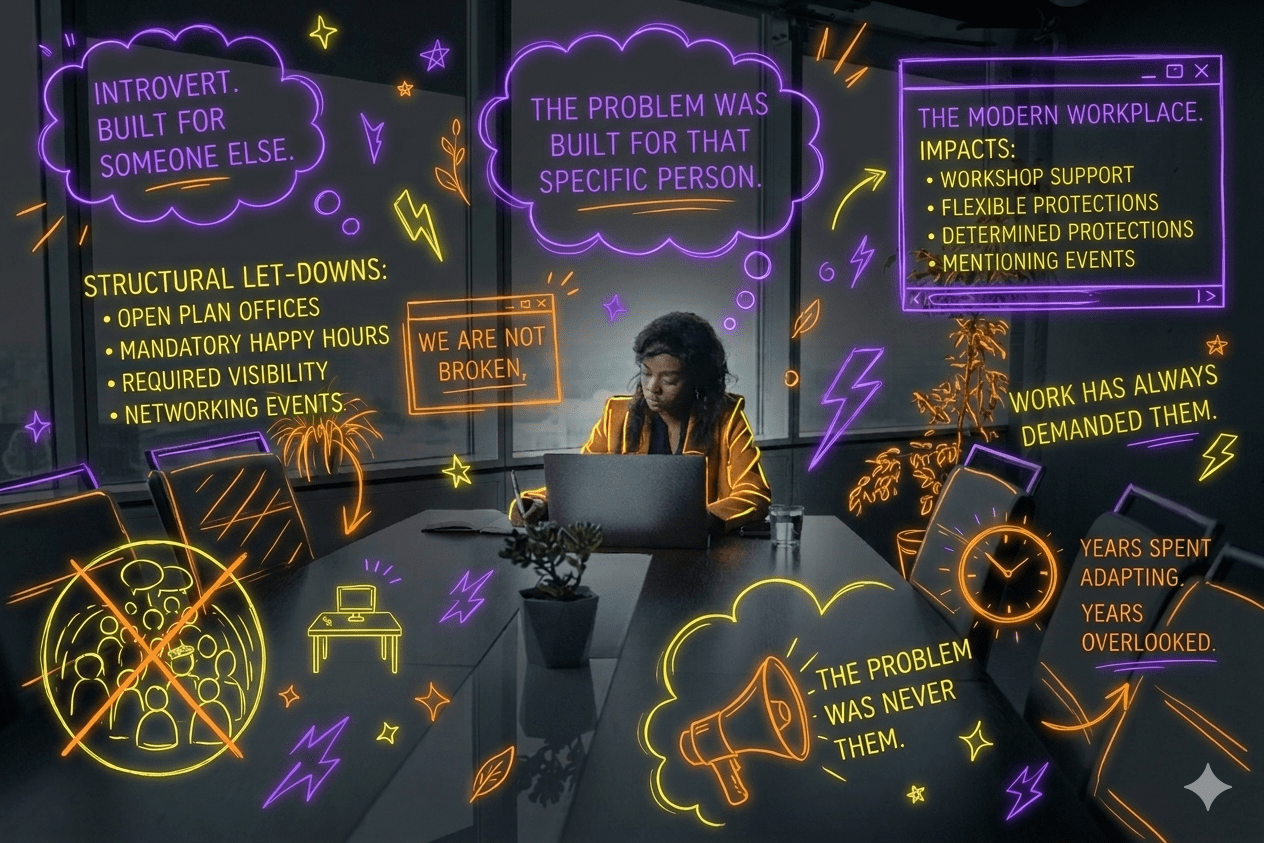
“Organisations are structured around extroverted traits; open plan offices, back-to-back meetings, a culture of going out after work – they’re the bane of an introvert’s existence. It’s very much designed in a way that caters more to people who think every thought out loud, who are happy with constant interaction, unlike introverts, who like to think before they speak, who want the agenda ahead of time,” she says. “It puts us at a disadvantage; it’s hard to bring your best when your needs are consistently being unmet.”
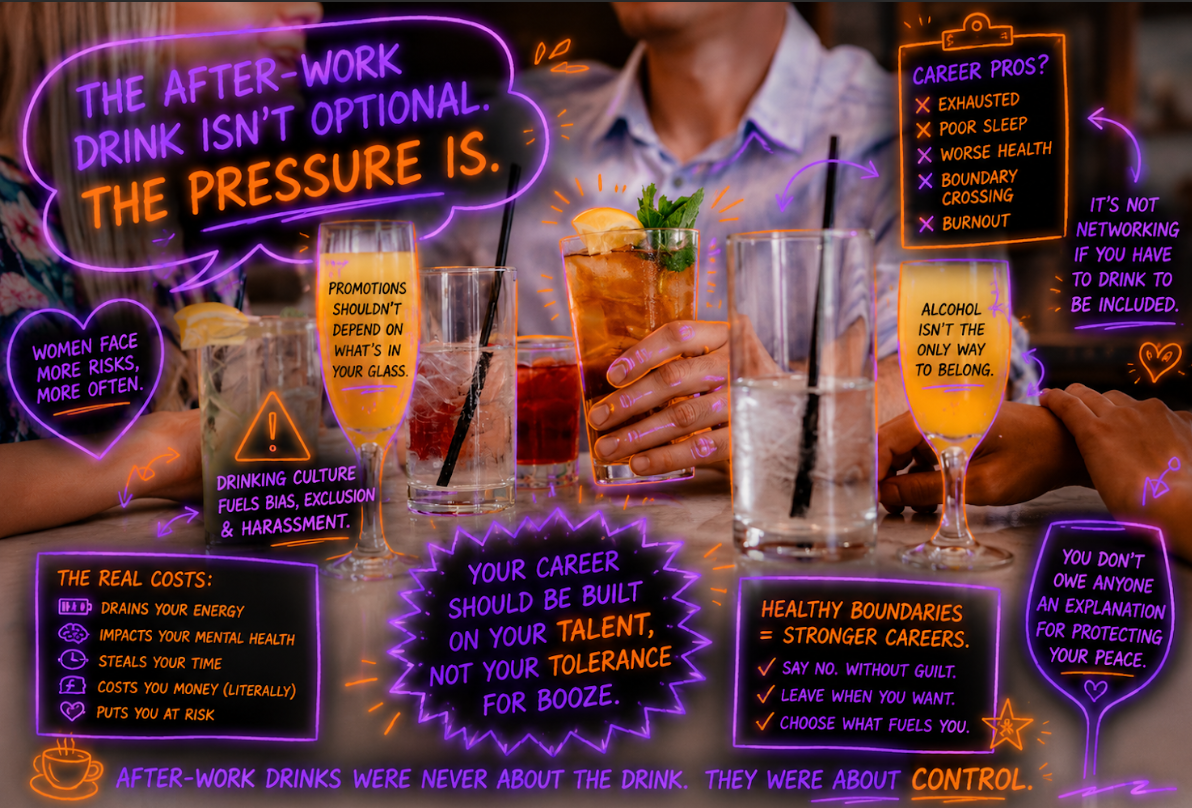
There’s a fucked up tendency in the working world to equate loudness or charisma with competence.

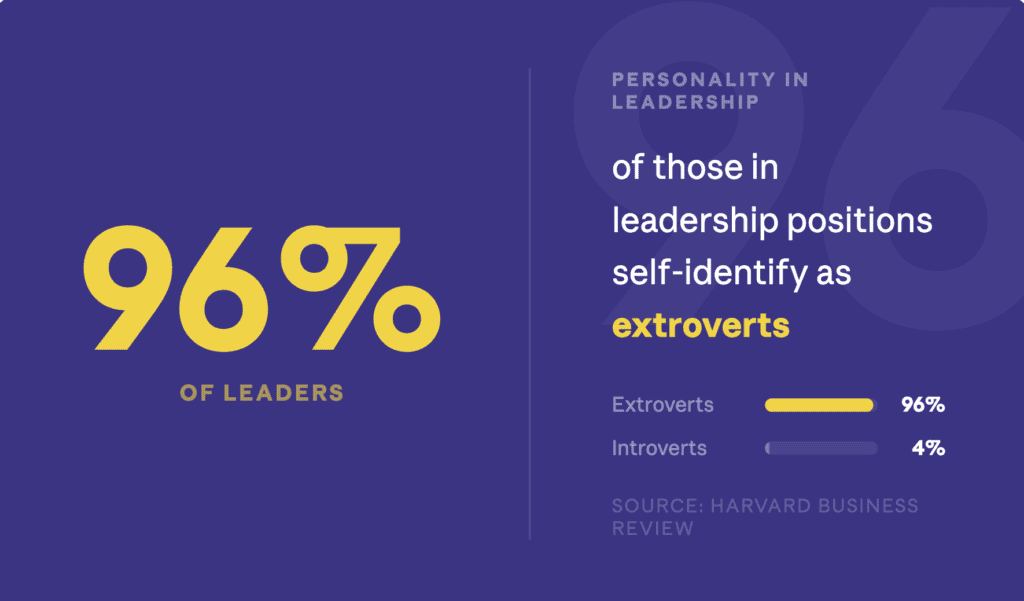
So much so that, according to Harvard Business Review, 96% of those in leadership positions self-identify as extroverts.
“The majority of those who progress upward in their careers are extroverted, and to a great extent, that’s more to do with perceptions of what a leader should look like rather than genuine performance,” she says. “Unfortunately, that means some of the most talented and capable employees are overlooked or undermined. We can be an organisation’s best-kept secrets, but squeaky wheels get paid; they get visibility. If we want those opportunities, there’s an unfair expectation to change ourselves. In a perfect world, the workplace is sensitive to our needs; it’s part of inclusion. Not just race, gender, and religion, but also personality preferences. It’s so important that we’re not all the same.”
The problem extends well beyond the four walls of your office.
“Our culture tends to favour people who are ‘out there’, telling stories, constantly joking. There’s this mindset of ‘it’s just the way we do things’, but that doesn’t mean it’s how it needs to stay,” she says. “Half the population are introverts, so it’s like – let’s get with the programme already.”
For many, it surfaces in performance reviews and stalled career progression.
Time after time, Tee received the same bullshit feedback: socialise, be more visible, show up differently.
“You’re misread before you’ve had a chance to say anything at all. Quiet, observant people can get mistaken for ‘disengaged’ by those who watch us briefly and decide they have us figured out,” she says. “Those assumptions shape how someone gets perceived in ways you don’t always notice until later. And the cruellest part is that the more you try to correct it by performing, the further you drift from the version of yourself that’s actually good at the work.”
Operating in these environments also takes a hefty internal toll.

Jennifer Marcou is the Seattle-based author of Lead with Quiet Confidence: The Practical Guide to Success for Introverts and an internationally sought-after coach.
She’s also a former Microsoft executive and founder of Marcou Coaching, where she helps introverts lead as their authentic selves.
“When success is consistently modelled through extroverted behaviours, introverted women internalise the notion that something is fundamentally wrong with them, not the system,” she says. “The reality is, introverts bring listening, pattern recognition, and calm decision-making, but it’s easy to assume you don’t belong when you never see your working style in practice.”
To cope, most end up performing a contrived version of themselves.
“Introverts consciously behave in a way that doesn’t come naturally in order to meet workplace expectations. This chronic masking comes at a real cost, cognitive, emotional, and physical. Introverts naturally operate at a higher level of brain stimulation, so constant outward engagement – rapid responses, social interaction – requires sustained effort. Over time, that leads to fatigue, stress, and burnout,” she says. “Introverts thrive on the neurotransmitter acetylcholine, related to quiet and relaxation, and extroverts thrive on the neurotransmitter dopamine, rewarding them for social interaction and activity. We, introverts, cannot be extroverted, no matter how we try – it’s against our nature, and when you’re continuously performing, it creates a sense of disconnection from the self. Our wiring is our wisdom.”
Women are particularly vulnerable to this.
“Introverted women experience double the pressure. As introverts, they’re navigating an extrovert-coded workplace. As women, they’re socialised to be accommodating, not disruptive, and not overly self-promotional,” she says. “That combination makes them more likely to over-adapt and under-challenge the system, even when it’s exhausting them.”
Tee’s constant attempts to keep up left her running on empty.
“What I didn’t realise at the height of it was how much constant social output was costing me,” she says. “It never showed up as one dramatic symptom. It showed up as an erosion. I’d be completely drained – mentally, emotionally – without being able to explain it.”
Not all hope is lost; some workplaces have started to catch up, offering alternatives to the relentless social demands of modern office culture.
Microsoft and Deloitte, for example, now provide structured quiet hours, asynchronous communication options, and meeting-free blocks.
If you’re on the hunt for a new job or want to talk things over with your manager, it’s important to understand what constitutes an introvert-inclusive environment.
“Make an active effort to find workplaces that understand you – don’t settle for ones that ask you to modify yourself. Look for a boss who genuinely has your back and sees your introversion for what it is: a strength,” Ancowitz says. “In interviews, ask whether there are quiet spaces available, whether you can block time in your calendar to think or problem-solve without it getting overridden, and whether the culture actually supports that.”
There are concrete ways to move forward without burning yourself out.
“Be mindful of your energy needs rather than constantly pushing through them – and get clear on what you actually want. If your goal is a promotion, it will require some visibility. The question is how you get there in a way that honours who you are. It doesn’t have to be the loudest room or the longest night – go to the event but leave after an hour,” Ancowitz says. “Network, but do it on your terms: a coffee with one person will serve you better than a room of a hundred. Keep your options open, keep talking to people, and know you’re not trapped.”
There’s also inner work that can be done to stop haemorrhaging energy.
Carol Stewart is an award-winning coaching psychologist and founder of Abounding Solutions, a development consultancy for introverted women.
Based in London, she’s also the author of Quietly Visible and has been featured in Good Housekeeping, The Telegraph, and the BBC.
“Know what energises you and what depletes you – build your day around that where you can. Avoid back-to-back, high-pressure activities, and where something will inevitably drain you, build in recovery time afterwards, instead of pushing through,” she says. “Prepare in advance for anything that requires on-the-spot thinking – meetings, interviews, difficult conversations. As introverts, we make deep thinking our superpower. Give yourself the time to use it; this will reduce overwhelm or anxiety.”
One of the best things an introverted woman can do is simply get to know herself better.
“Developing self-awareness is crucial – it allows you to understand your strengths and limits so you can actually protect them,” she says. “Introverts burn out because their working style differs from the norm. The more you understand how you work, the better equipped you are to navigate that and modify your behaviour when it counts,” she says. “A great way to do this is by scheduling regular time to be still, think and self-reflect – physically block this out and protect it like you would a meeting.”
Today, Tee is an influencer with over 35,000 followers, helping introverted women navigate the workplace with the advice she never had.
@the_selectivesocial Is it just me? #introvertproblems😅 introvert #theselectivesocial ♬ original sound – The_Selectivesocial
She now treats her energy as non-negotiable, protects recovery time, and stops giving away what isn’t part of the actual job.
Visibility and collaboration matter – but communication doesn’t look the same for everyone.
The expectation that some contort themselves into a more palatable version just to be taken seriously is fucking ridiculous.
Introversion isn’t the deficit here; the workplace’s obsession with extroversion is.