

Loxie dismissed the pain for months – convinced it was just another thing to push through.
But as each month got closer, the anxiety got worse.
And when the dreaded period finally arrived, she found herself doubled over at work, unable to stand.
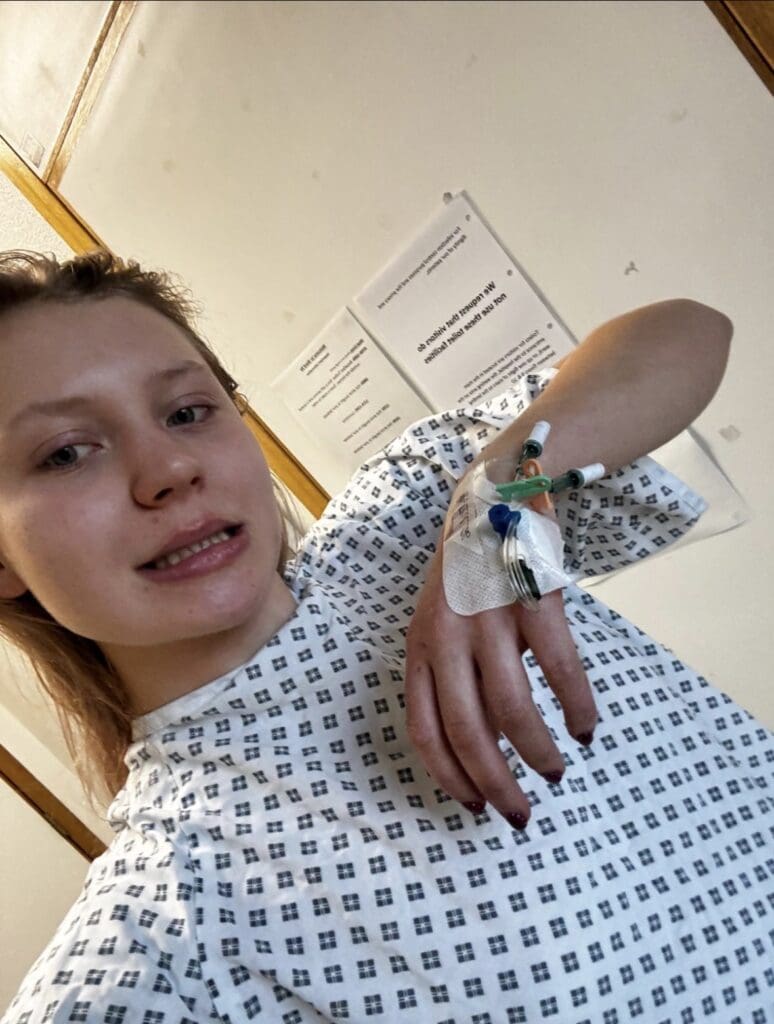
It wasn’t until she collapsed on a train and was rushed to A&E, where doctors discovered her fallopian tube had twisted and cut off blood supply, that she realised ‘pushing through’ wasn’t the answer.
“You put it at the back of your mind,” says Loxie Chiles, a barista based in Cotswolds, UK. “You feel a bit silly asking for time off because you think everyone else deals with this too. I didn’t trust myself enough to acknowledge that what I was experiencing was really real.”
Loxie’s experience is not an anomaly.
According to Women’s Health Concern, around 80% of women experience period pain at some stage in their lifetime – ranging from mild discomfort to symptoms severe enough to derail daily life.
And most of them keep going anyway.
So what’s the solution? Apparently, menstrual leave.
The policy – paid time off during menstruation, with duration varying based on symptom severity – has been introduced worlwide; Japan implemented it in 1947, Spain, in 2023.
In the UK, campaigners argue it could help women with debilitating symptoms without shame or professional consequences.
Some experts aren’t convinced.
Dr Sally King is a leading UK researcher in menstrual health at King’s College London – and thinks menstrual leave is naming the wrong problem.
“It seems progressive, but it is not,” she says. “What it’s doing is blaming the menstruating body and the menstruating employee. This isn’t a woman thing – it’s a workplace not being fit for menstruating bodies problem. The workplace pretends that human beings are not made of human materials. You should be 100% fit, active and able all the time.”
On the surface, menstrual leave validates pain that has been dismissed for way too fucking long.
In practice, workplace cultures reward overwork and punish vulnerability meaning fear of judgment, financial insecurity and falling behind prevent most women from using it at all.
“You’re too scared to ask for a break – even a toilet break,” King says. “You lose your source of income, you can’t eat, you can’t pay your mortgage.”
For women, these pressures dont stop when the workday does – childcare, emotional labour, domestic work (to name a few).
“You’re probably working a 70-plus-hour week every week,” King says.
If menstrual leave isn’t the answer, what the hell is?
“Would one day a month reduce burnout? Tiny bit, maybe,” King says. “But what would really reduce it is a four-day working week for everybody.”
Real change, she argues, means redesigning workplaces around human needs – not creating exceptions for certain bodies.
Better sick leave, flexible hours, adequate rest, improved menstrual education. Not special treatment, but the removal of the expectation that discomfort must be overridden to prove commitment.
“Menstruating is normal,” she says. “Being overworked is not.”
For Loxie, the pressure to keep going nearly had devastating consequences.
Now recovered, she is still processing how easily she normalised months of feeling like shit.
“I definitely don’t think I’ll do that again,” she says.
And nobody else should have to.