
When Emma (not her real name), 30, stopped wanting sex, she assumed the problem was her marriage.
“I genuinely thought I wasn’t interested in my husband anymore,” she says. “I loved him, but I never wanted sex. I thought maybe something had changed between us.”
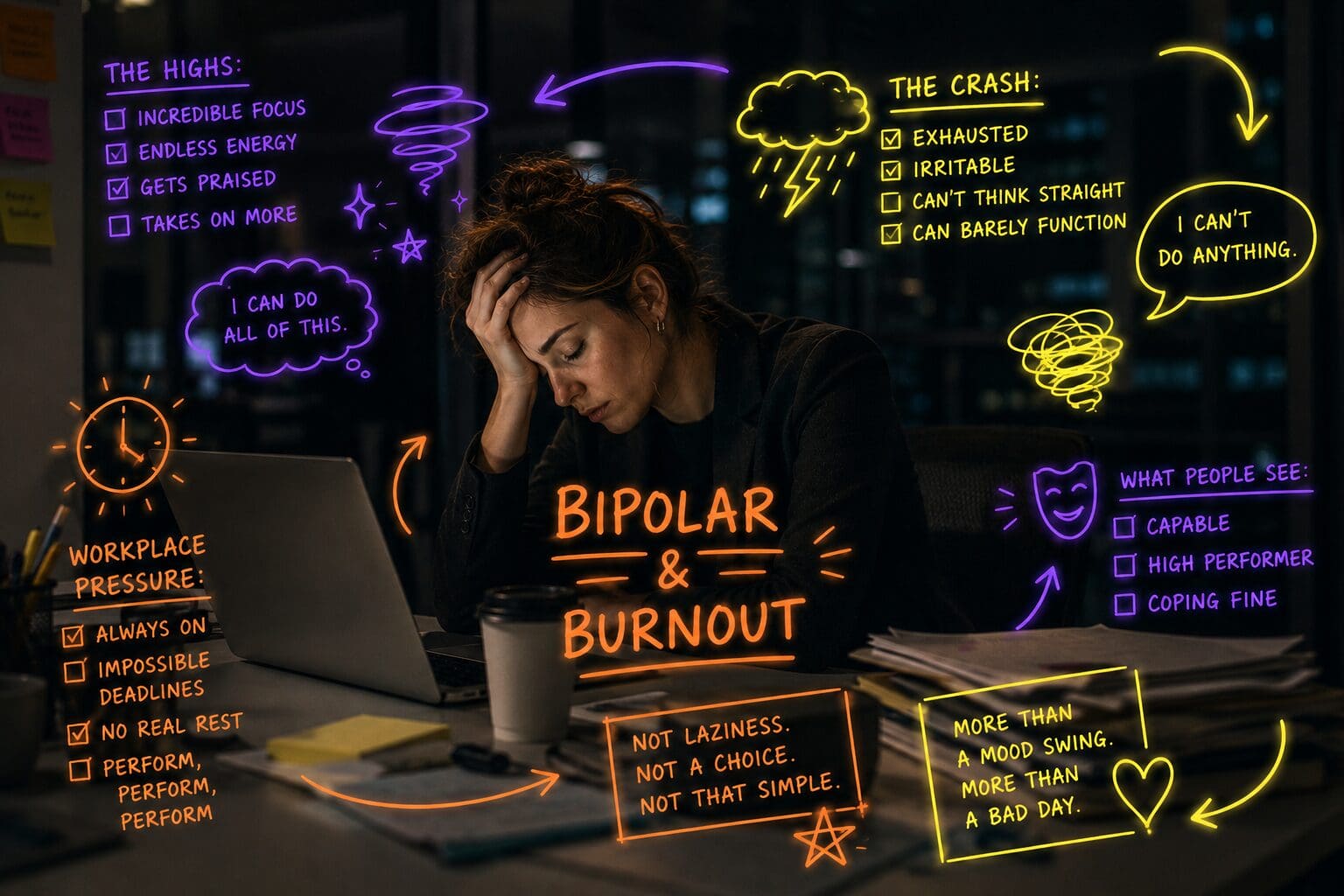
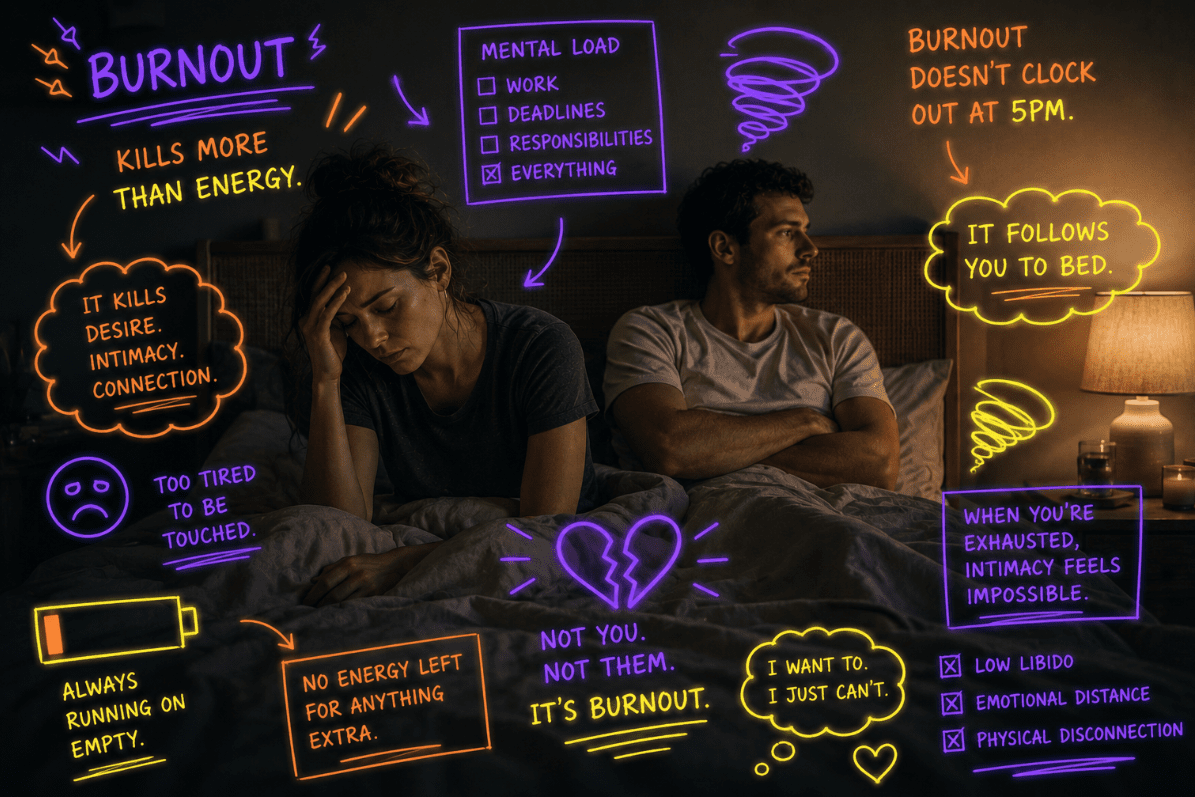
What Emma didn’t realise was that the issue wasn’t her relationship. It was burnout.
“It got to the point where I was questioning the relationship, when actually I was just completely exhausted.
“I considered divorce. I thought maybe the spark had just gone between us. At one point I felt like I was sharing a bed with a stranger – we were that disconnected,” she says.
Emma’s experience isn’t unusual. Research has shown that women are twice as likely to lose interest in sex during a stressful period than men.
But why does workplace burnout extinguish the flame in the bedroom? And how can you get your spark back?
Author, psychologist, and sex therapist, Dr. Laurie Mintz said: “I think the lack of boundaries that some jobs entail into our personal life can be particularly problematic. The expectation that you respond to emails and texts from work colleagues and bosses on evenings or weekends for example.”
For women already carrying disproportionate responsibilities outside work, those blurred boundaries can make it even harder to switch out of survival mode and into a mindset where sex feels possible.
“Women often feel stressed out, and they think they should be able to power through it, make themselves interested in sex,’ Dr. Mintz says.
“And the point is, it’s not something to be powered through, because it’s actually changed your biological system.”
She says: “Psychologically when you’re that exhausted, tired, burned out, you don’t have energy for almost anything. Sex is one of those things that probably falls off the wayside.”
But it’s not just that the thought of a quickie doesn’t get your blood pumping, your biology is literally changed by stress.
“Chronic negative stress increases our cortisol levels, Ironically, high cortisol levels make your adrenal glands under-reactive to other stressors. And that includes the stressor of sex.
“If you are chronically stressed, you are going to have less interest in sex at a biological level,” Dr. Mintz says.
For Emma, that rang painfully true.
“I was working long hours, constantly thinking about work, and then trying to stay on top of everything else at home. By the end of the day I didn’t want anything from anyone.

“We’d always had such an exciting sex life, I thought we’d lost something. Looking back, I can see I wasn’t losing interest in my husband. I was losing the ability to enjoy anything because I was so burnt out.”
But consequences of skipping shags don’t stop at the bedroom door.
According to Dr. Mintz, a prolonged reduction in sex can have a significant impact on relationships, particularly when one partner wants sex more often than the other.
“In monogamous relationships, a big thing that differentiates a monogamous sexual relationship from other relationships is that you’re having sex,” she says.
“So you’re taking away this one thing that you do with no one else that binds you.”
The result can be resentment, tension and disconnection, especially if couples avoid talking about the issue.
“When people are having good sex, it’s just something good, and they don’t spend a lot of brain time on it,” Dr. Mintz says. “But when they’re having problems, it takes up an enormous amount of brain time and stress and angst.”
One of the most bullshit aspects of burnout is that it often removes your desire for activities that might actually help you feel better.
“The irony is when we’re stressed, we don’t want sex, and we’re having trouble sleeping,” says Dr. Mintz. “Sex is a great stress reliever and a great sleep aid.”
That creates a difficult cycle.
The more stressed we become, the less interested we may feel in sex. Yet by withdrawing from sex altogether, we can miss out on some of the emotional, physical and relational benefits it provides.
What a fucking joke. The thing that might make you feel better, is the thing you want the least.
Dr Mintz says that the key to breaking this bullshit cycle is to change the way we think about sex and desire.
“We have this myth in our culture that we need to be horny to have sex or otherwise it’s duty sex, or it’s bad, and that all sex has to start with being horny,” she says.
“That’s called spontaneous sexual desire. There’s another form of desire called responsive sexual desire. You have sex for reasons other than being horny, like, ‘I know it’ll be good when it gets going’ or ‘I’ll feel closer with my partner.’
“The desire follows the touch. Instead of waiting to be horny to have sex, you have sex and get horny.”
But sometimes, it’s not even about the desire, it’s about the calendar too.
Emma says: “Sometimes I would make a plan during the day that I was going to initiate sex that night, and then my husband would have to work late or bring work home, and I didn’t want to stay up waiting.
“So another day would go by and we still hadn’t had sex.”
Dr Mintz says that scheduling sex, like you would schedule a meal with friends, may actually be the saving grace of your sex life.
“Nothing happens in these busy, burning out lives without it being on the calendar,” she says.
“Rather than being unromantic, it’s really lovely because it’s saying, ‘This is important enough to me and I’m gonna carve out time for it.’ And you can save energy for it, anticipate it.”
For women balancing careers, relationships, caregiving responsibilities and countless other demands, that mindset shift can be powerful.
In recent years, conversations about wellbeing have expanded to include sleep, exercise, nutrition, mindfulness, and therapy. Perhaps sex deserves a place on that list too.
Why shouldn’t sex be treated with the same importance?
For Emma, understanding the connection between burnout and sex changed the way she viewed both her marriage and herself.
“I genuinely thought I’d fallen out of love,” she says. “Looking back, I can see I was just completely exhausted.”
Once she began addressing the stress in her life, her relationship started to feel different again, not because her feelings had changed, but because she finally had the energy to engage with them.
It’s a reminder that a fading sex life isn’t always a sign of a failing relationship. Sometimes it’s a sign that something else is demanding too much of us.
As Dr. Mintz puts it: “When you’re that exhausted, tired, burned out, you don’t have energy for almost anything.”
And sometimes, before couples can reignite their sex lives, they need to address the thing that extinguished the spark in the first place.