
There are very few things holding modern society together: Wi-Fi. Instagram reels. And caffeine.
That’s genuinely starting to feel like the full list.
So when I found a statistic saying 21% of workers depend on caffeine to get through the workday, I initially thought: only 21%? That feels suspiciously low.
But in the spirit of journalism, self-inflicted suffering, and apparently hating myself, I decided to give up caffeine for four days to see what would happen to my body, brain, mood, productivity, and general will to participate in society.
No coffee. No energy drinks. No Pepsi Max. No little “treat” iced latte because it was 30 degrees on bank holiday Monday and I deserved joy.
Just raw existence.
And honestly? It felt medically incorrect.
The more interesting question isn’t whether people consume caffeine. Of course they do. Humans have been drinking caffeinated substances for centuries.
The question is why caffeine now feels less like a beverage and more like workplace life support.
Because somewhere along the line, tiredness stopped being treated like a biological signal and started being treated like a personal failure.
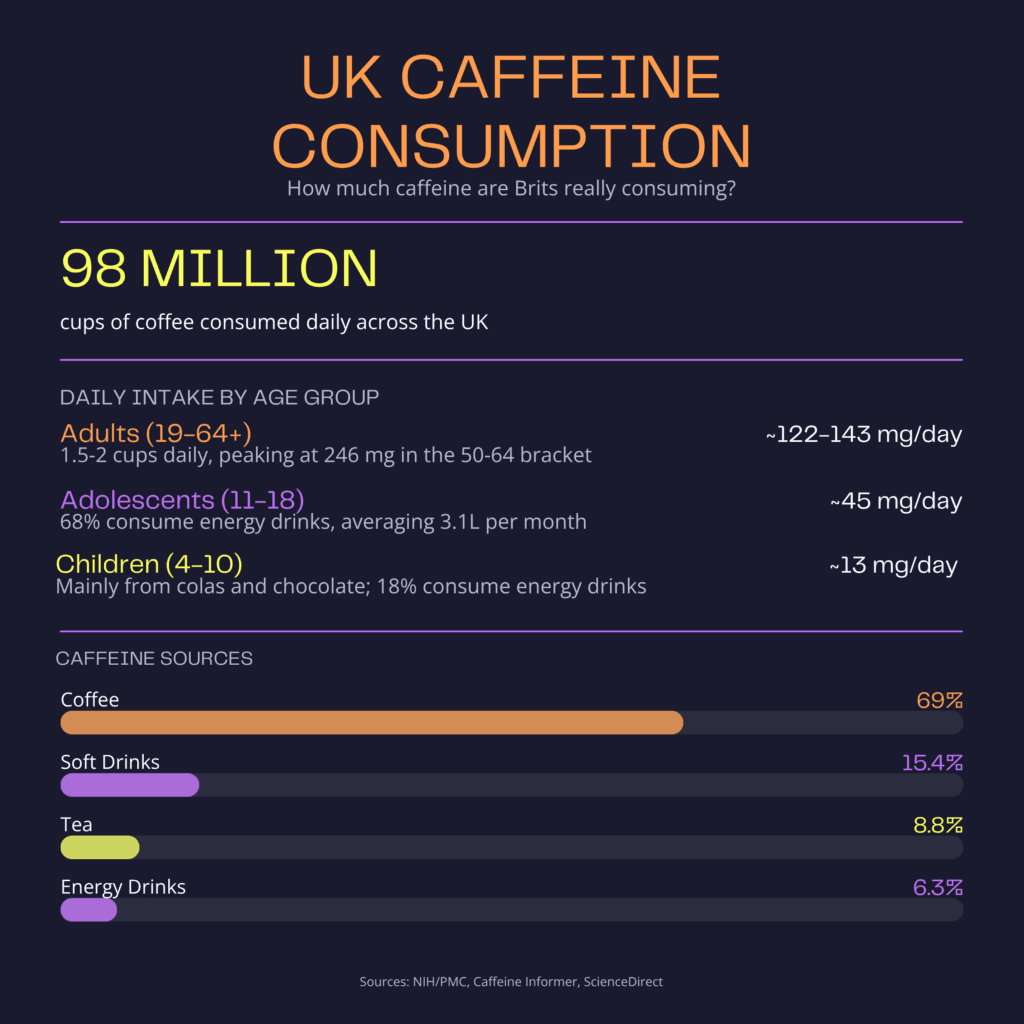
In the UK alone, people consume roughly 98 million cups of coffee every single day. Which honestly explains why Pret queues at 8:30am look less like casual coffee runs and more like emergency response procedures.
And caffeine isn’t just coming from coffee anymore. Research from Caffeine Informer found coffee accounts for around 69% of total caffeine intake, followed by soft drinks at 15.4%, tea at 8.8%, and energy drinks at 6.3%.
At this point, caffeine is less a drink choice and more the operating system modern work culture quietly runs on.
Nobody bats an eye at someone saying they “need” three coffees to survive the workday because everyone else is doing the exact same thing.
But the science behind caffeine is actually far more complicated than the wellness panic or productivity worship surrounding it, because despite its reputation as society’s favourite legal coping mechanism, moderate caffeine consumption is linked to a genuinely surprising number of health benefits.
Caffeine works primarily by blocking adenosine receptors in the brain. Adenosine is the chemical responsible for making you feel sleepy throughout the day, so caffeine essentially interrupts your brain’s ability to fully register fatigue.
Which explains why a flat white can temporarily make you feel spiritually reborn at 9am despite sleeping horribly the night before.
But caffeine also affects dopamine signalling, which is partly why coffee feels psychologically rewarding rather than simply energising.
And contrary to the “coffee is ruining your body” panic that occasionally sweeps TikTok every six business days, research increasingly suggests moderate caffeine consumption may actually support long-term health in several areas.
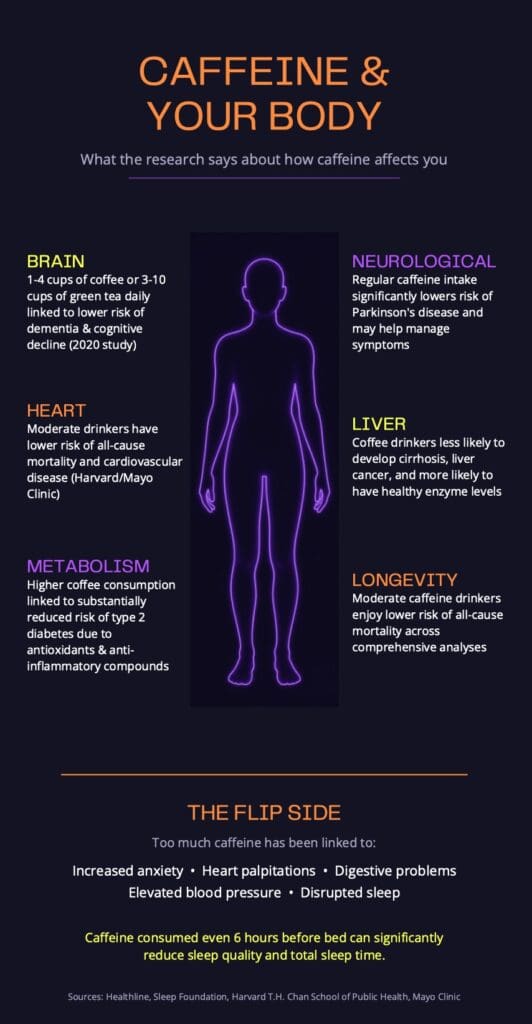
Research published in 2020 found people who consumed moderate amounts of coffee (around one to four cups daily) had a lower risk of dementia and cognitive decline later in life.
Regular caffeine intake has also been associated with significantly lower risks of developing Parkinson’s disease, with a study from healthline suggesting it may even help manage symptoms in people already diagnosed.
Which is honestly incredible PR for something most people consume while dissociating in front of unread emails. So no, caffeine is not secretly killing everyone. If anything, the research suggests your little iced latte is probably doing less damage than your unread Slack notifications.
The problem is that people increasingly treat caffeine like a harmless personality trait instead of a stimulant that actively affects the nervous system.
Because while moderate caffeine intake is generally considered safe for most adults, excessive consumption can absolutely fuck you up.
Too much caffeine has been linked to increased anxiety, heart palpitations, digestive problems, elevated blood pressure and disrupted sleep. And the sleep issue is particularly brutal because many people don’t realise how long caffeine actually stays in the body.
And while caffeine can improve focus temporarily, relying on it constantly can also mask underlying burnout, chronic stress, poor sleep hygiene or overwork.
Researchers have found caffeine consumed even six hours before bed can significantly reduce sleep quality and total sleep time. Which means the harmless little 4pm iced coffee people drink to survive work may also be the exact reason they feel exhausted the next morning.
It’s a perfect cycle: you’re tired > you drink caffeine > the caffeine affects your sleep > you wake up more tired > you need more caffeine.
Capitalism’s most annoying trait.
There’s also the dependency factor. Regular caffeine use changes how the brain responds to stimulation, meaning withdrawal can trigger headaches, fatigue, irritability and difficulty concentrating. Which I discovered personally around Day Two when I briefly lost the ability to form coherent thoughts before midday.
At a certain point, the issue stops being “I love coffee” and becomes “my nervous system is being held together by cold brew and panic”.
Maybe that’s the real reason caffeine has become such a personality trait in the first place: because admitting we’re exhausted feels a lot less acceptable than pretending we’re just really into iced coffee.