
Apparently, we’re optimising unconsciousness now, too.
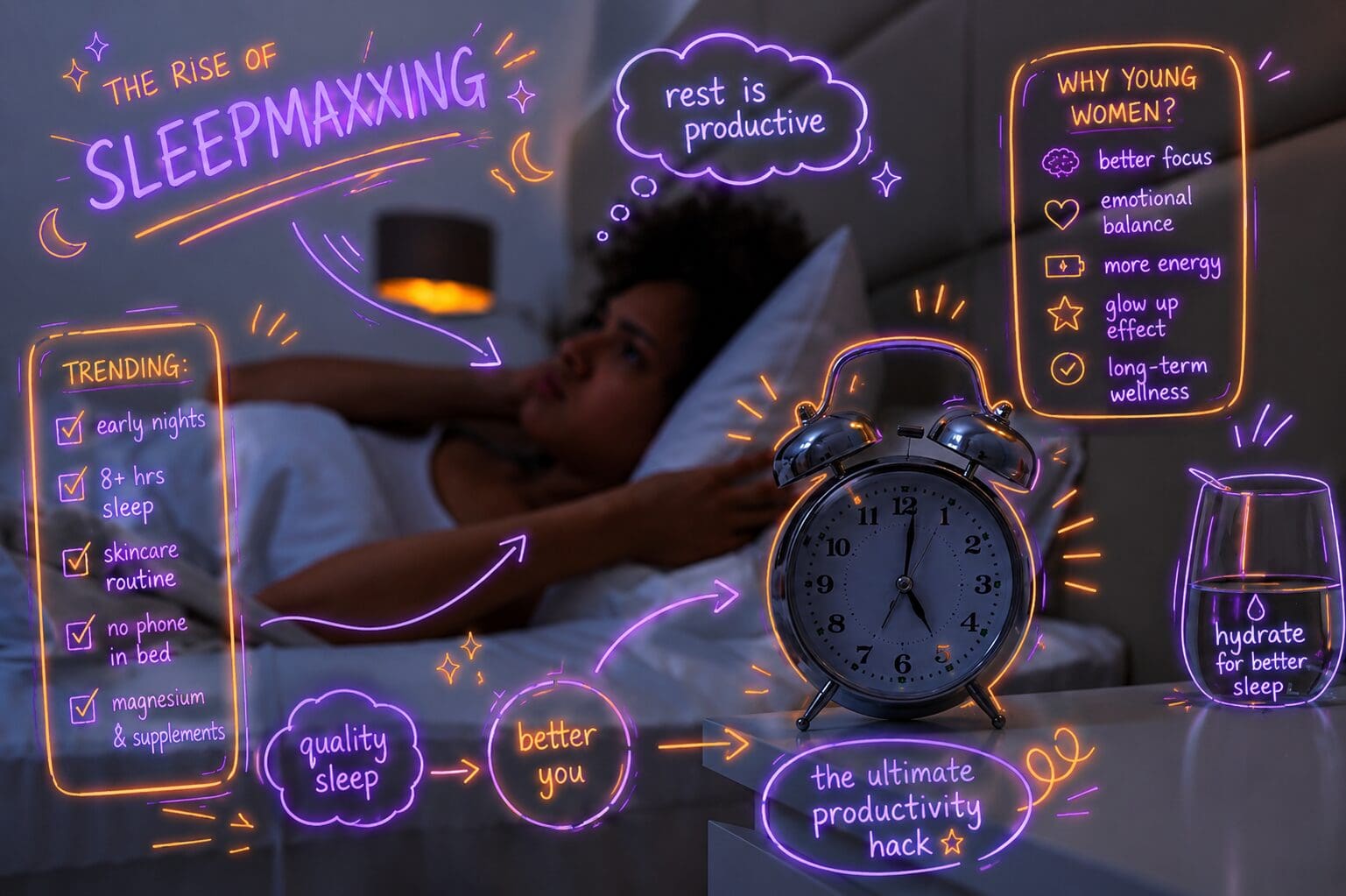
According to Healthline, sleepmaxxing is a new wellness trend about maximising the quality and quantity of your sleep.
It sounds harmless enough until you realise TikTok has transformed going to bed into a full-time administrative operation complete with ‘magnesium cocktails’, mouth tape, melatonin gummies, sunrise alarm clocks, and enough biometric tracking to turn sleep into a military regime.
Videos are pulling in hundreds of thousands of views, with creators documenting their batshit nighttime routines designed to get them the perfect sleep score.
The AASM Sleep Prioritisation Survey found that over half of Gen Z and half of the millennial population have tried at least one social media sleep trend.
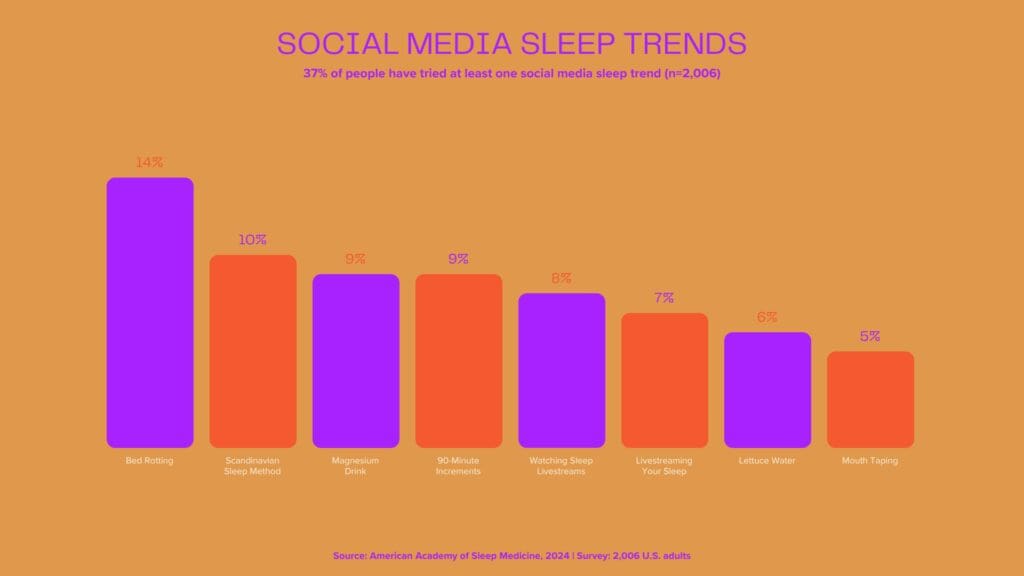
It’s gone from a biological necessity to yet another fucking performance metric; ‘sleepmaxxing’ is less about rest and more about control.
Who can blame us, though? The average nervous system is being drowned by financial anxiety, 12-hour screen time or relationship admin; it’s only natural to want to fix the one thing that holds you together.
The problem is that sleep doesn’t behave the same way as productivity does.
Kathryn Pinkham is the founder of The Insomnia Clinic and a former NHS clinician specialising in insomnia and sleep problems. She works with people struggling with everything from difficulty falling asleep to waking in the night.
“Some things can absolutely help certain people, but I also think many are creating more anxiety and hyper-focus around sleep,” she says. “Sleep works best when it feels automatic and safe. The more we monitor it, track it, analyse it, and try to force it, the more alert the brain often becomes.”
This is where the internet’s newest psychological nightmare enters the chat: orthosomnia.
Pinkham describes it as “An unhealthy obsession with achieving perfect sleep, often driven by sleep trackers and optimisation culture.”
In other words, people are becoming so fixated on sleeping ‘correctly’ that they accidentally give themselves fucking sleep stress.
“People become distressed by ‘bad’ sleep scores, even if they actually felt okay before checking the data,” she says. “They start over-monitoring themselves and changing behaviour constantly in pursuit of ideal sleep, and ironically, this pressure and vigilance is often part of what keeps insomnia going.”

Wellness-optimisation culture has convinced us that every single bloody bodily function has to be measured or improved. Your sleep isn’t just sleep anymore, it’s data.
According to Pinkham, what actually works is far less fluffy than whatever TikTok is currently trying to sell you.
“Things like creating a stronger appetite for sleep, reducing time spent awake in bed, addressing sleep anxiety, reducing pressure and vigilance and working with the body’s natural sleep drive are all evidence-based and proven to help,” she says.

Day 1: What Controls Our Sleep?
In order for our body clock to work well, we need to send messages about when is daytime and when is nighttime. The best way to do this is to get plenty of light during the day and dark at night. Discover the core triggers controlling your sleep patterns.
View Day 1 Course PageUnsurprisingly, this is far less marketable than sleep gummies and an Oura ring.
Underneath all the bullshit of the wellness industry lies a bigger question: Are women actually more exhausted than ever before?
“Women are definitely talking more openly about exhaustion, burnout, and mental load, which is positive, but I also genuinely think many women are carrying an enormous cognitive and emotional load now,” she says. “They are often juggling careers, caregiving, parenting, relationships, financial pressure, constant digital stimulation, and expectations around self-improvement all at once, and the nervous system was never designed to be permanently switched on in the way many people are living today.”
‘Sleepmaxxing’ has become a side effect of collective exhaustion, with people trying to optimise rest because they can’t cope with how overstimulating modern life has become.
In response to this, Pinkham provides support through the ‘Sleep Well, Live Better’ programme, which is an accessible, evidence-based approach that people can work through in their own time.
Ultimately, this trend reveals something deeper than bedtime routines: a generation so psychologically fucked up by productivity culture that even rest is another performance.