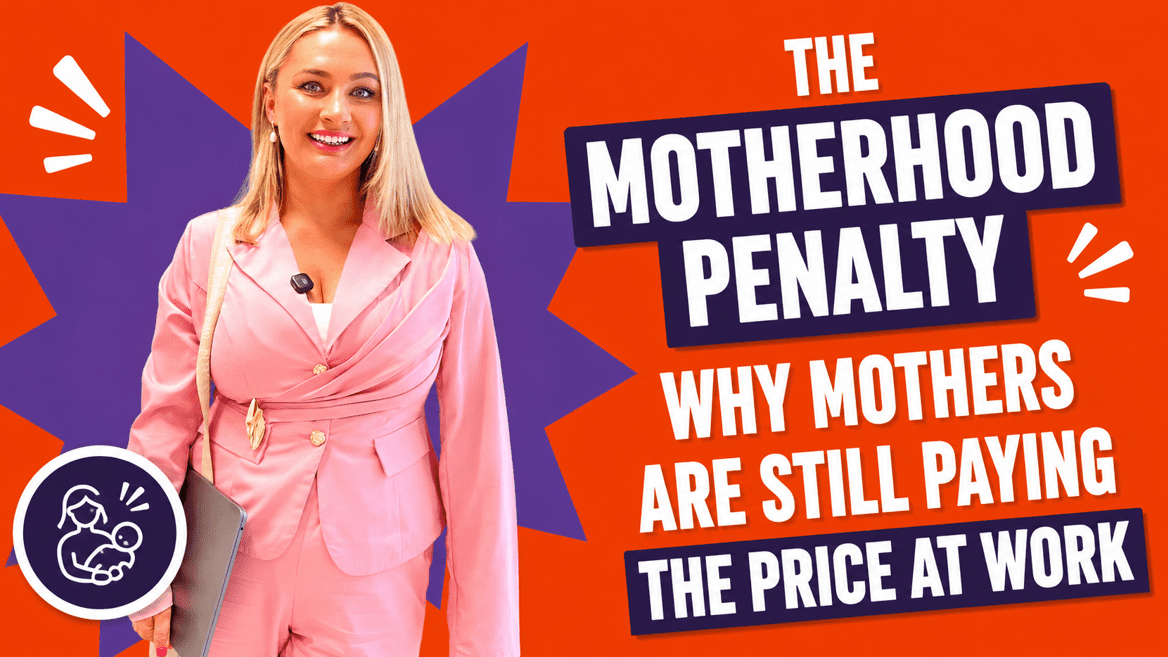

We all know about the motherhood penalty. When you have children, unfortunately the workplace looks over you. You’re written off as unambitious.
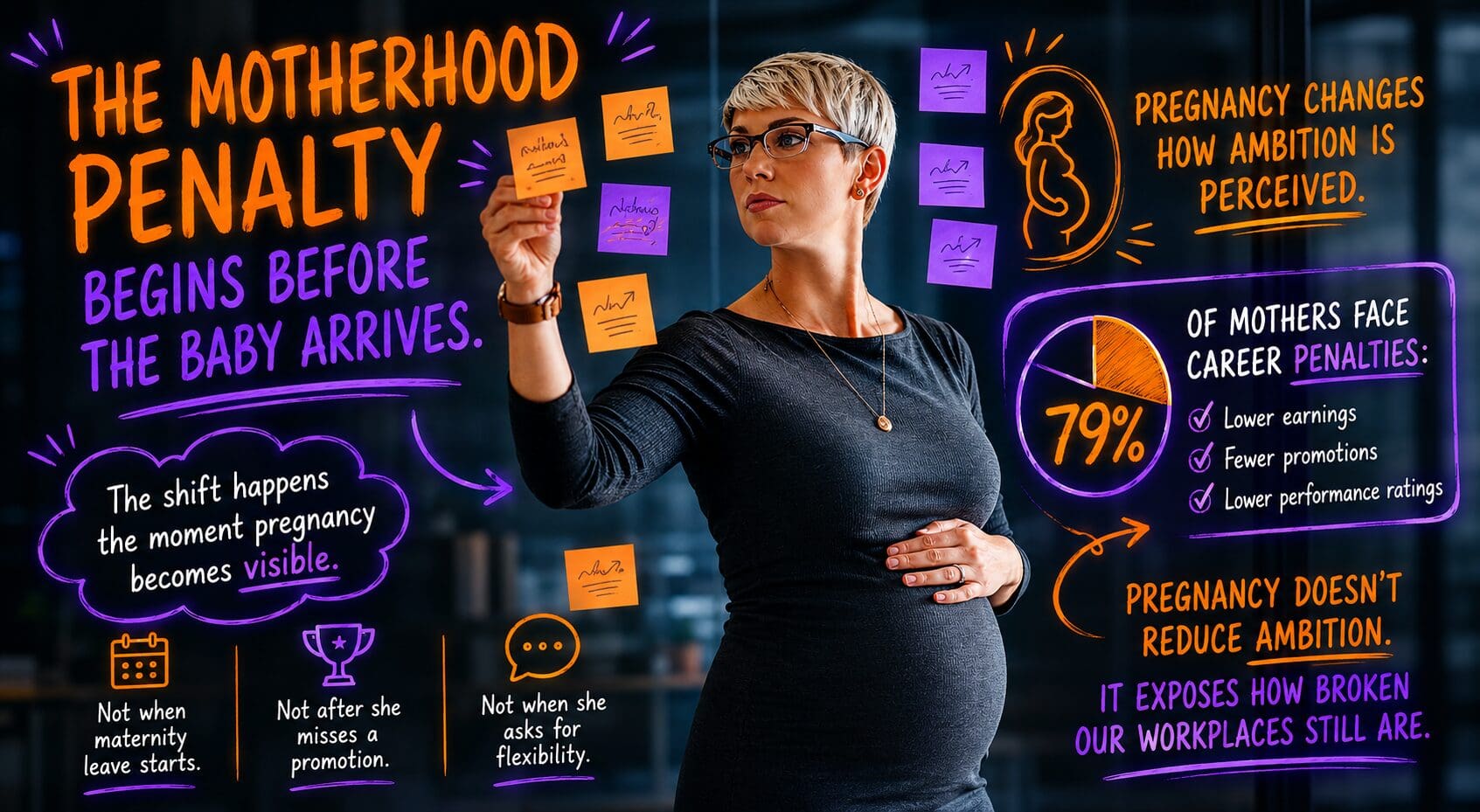
But the motherhood penalty doesn’t begin when a woman has a child. It begins the moment pregnancy becomes visible.
Not when maternity leave starts. Not after she misses a promotion. Not when she asks for flexibility.
The second coworkers notice a bump, many women experience the same eerie professional transformation: they stop being seen as ambitious people temporarily pregnant and start being treated like mothers temporarily pretending to have careers.
And corporate culture still acts shocked when women feel forced to choose.

Research has consistently found that motherhood functions as a workplace status characteristic, shaping assumptions that women are less competent, less committed, and less interested in leadership. Pregnancy becomes a kind of social and professional signal – one that quietly tells employers, managers, and colleagues to start lowering expectations.
The brutal irony is that she doesn’t need to change a fucking thing. She can still be hitting deadlines, leading meetings, managing teams, answering emails at ungodly hours like the rest of the corporate world’s sleep-deprived zombies. But pregnancy changes how her ambition is interpreted. Suddenly every future-facing conversation becomes loaded.
Will she still want the promotion?
Will she be fully committed after the baby?
Will she come even back?
Questions men almost never face with the same intensity because fatherhood is often interpreted as stability, while motherhood is interpreted as liability. A pregnant man is viewed as responsible. A pregnant woman is viewed as distracted before she’s even bought a stroller.
Caitlyn Collins, Associate Professor and Director of Undergraduate Studies in the Department of Sociology at Washington University in St. Louis, says: “Because we live in a society based around gender essentialism, or the belief that women and men are ‘naturally,’ inherently, essentially different than one another, with the belief being that men’s primary task is to breadwin and a woman’s is to maintain the home.
“This means that women are considered categorically less interested and less capable in the world of paid work, which is untrue. This set of cultural norms is socially constructed, and these scripts can be rewritten.”
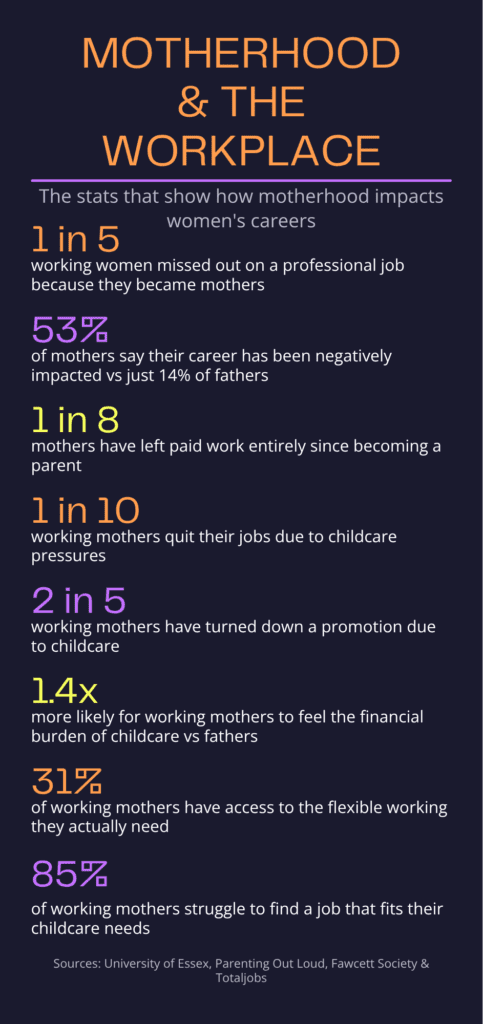
That’s the contradiction at the center of modern professional life: workplaces spent decades encouraging women to lean in, chase leadership, and build careers, while quietly maintaining a definition of the “ideal worker” that assumes someone else is handling all domestic labor behind the scenes.
The ideal employee is still imagined as endlessly available, emotionally unencumbered, and capable of treating work like a permanent state of existence rather than a thing humans do in exchange for money and deteriorating spinal health.
Pregnancy disrupts that fantasy.
Not because pregnant women are incapable workers, but because pregnancy exposes how shitty workplace expectations already are. It reveals that most professional environments were designed around a worker with no visible caregiving responsibilities – historically, a man with a wife at home managing the rest of life.
Collins says: “Ideal workers are meant to be available 24/7 to meet their employers’ needs, which runs counter to the ‘ideal mother’ cultural ideal, which suggest the same should be true about one’s family. These two prevailing cultural ideals butt heads, so often working mothers feel like they are failing in their careers and in their family life, leaving them feeling stressed, exhausted, and burned out. They often blame themselves for what they perceive as failures even though society is to blame for the lack of support we offer women and mothers.”
So pregnant professionals begin performing ambition almost theatrically. They overcompensate. They answer emails from medical appointments. They downplay exhaustion. They reassure managers they’re “still committed.” They treat basic human needs like incriminating evidence.
Not because they suddenly lost ambition, but because they understand the second pregnancy enters the room, people start looking for signs they did.
And when women eventually burn out under these impossible expectations, society reframes structural failure as personal choice.
Collins says: “Women can internalize these oppressive beliefs. It’s easier to explain it as a personal choice than to acknowledge that our workplaces are built around outdated assumptions of a father breadwinner/mother homemaker family model, which is simply not the case. Women, men, and families need more policy supports to enable them to have calmer, more fulfilling work and family lives.”
Sociologist Pamela Stone documented the ways in which women reproduce these narratives when they ‘opt out’ of successful careers to be stay-at-home mothers, invoking a narrative of choice to explain their decision. This makes complete sense given how shit it feels to constantly feel like you are caught between two words.
The “choice” narrative is comforting because it protects institutions from scrutiny. It allows companies to market empowerment while avoiding the uncomfortable reality that many workplaces remain fundamentally incompatible with caregiving, pregnancy, or frankly basic human functioning.
Corporate feminism sold women ambition. It just forgot to redesign work around actual lives.
So women are left trying to satisfy two impossible identities at once: the ideal worker and the ideal mother. Both demand total devotion. Both require endless emotional labor. Both punish failure mercilessly.
And somehow women are still blamed for feeling exhausted by the arrangement.
Collins’ final advice is refreshingly practical amid all the corporate nonsense:
“Check out the mamattorney on Instagram so you know your legal rights and protections!”
Because when pregnancy still causes employers to quietly recalculate a woman’s value in real time, knowing your rights isn’t pessimism. It’s self-defense.