
One week, you’re smashing workouts, booking spin classes and feeling like you’ve finally got your life together.
Next, you’re skipping the gym, cancelling those classes and wondering why you’ve suddenly lost all discipline.
It’s the same schedule, with the same intentions, but with completely different outcomes.
But what if the problem isn’t your motivation? What if it’s the expectation that your body should perform the same? Every. Single. Fucking. Day.
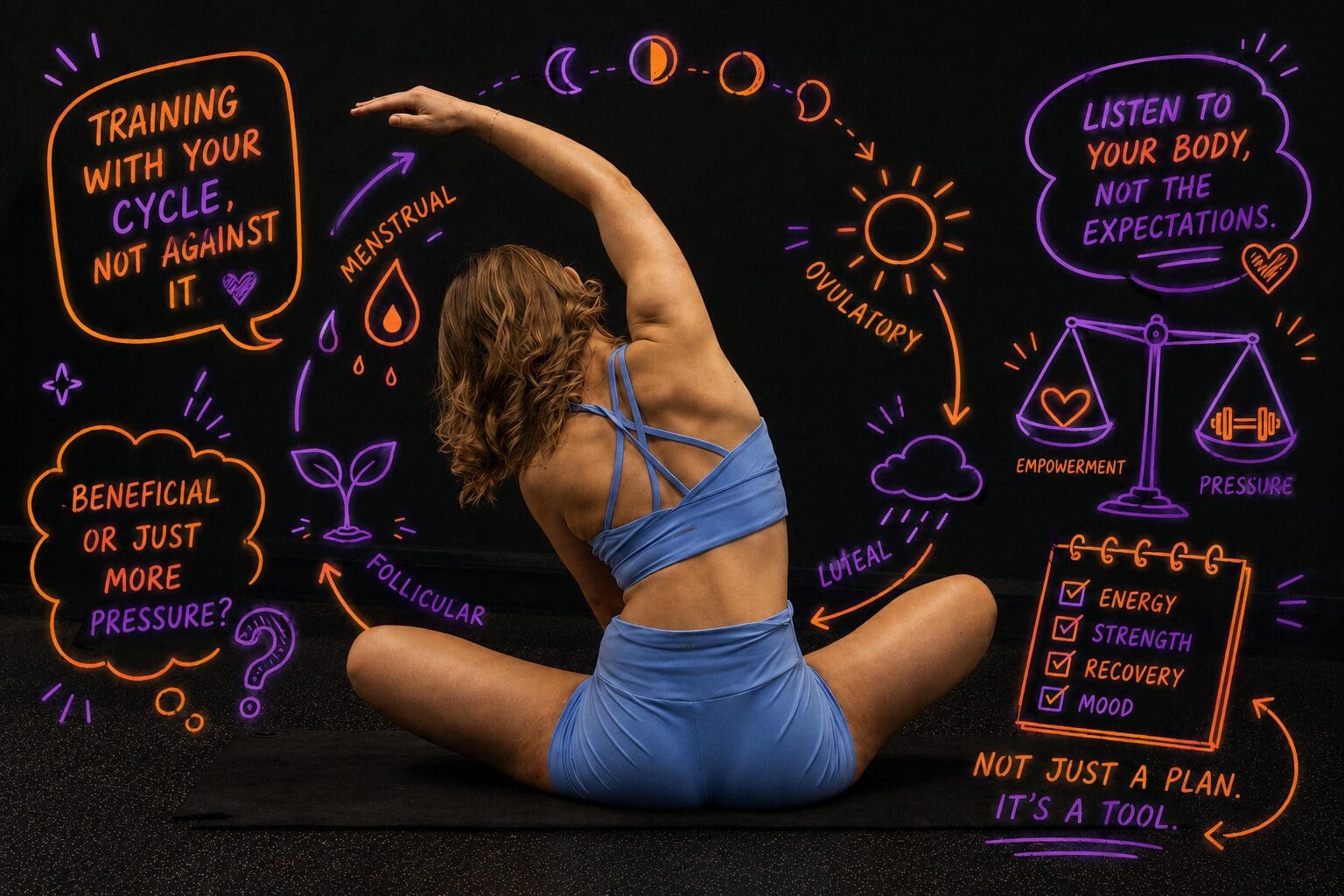
Cycle-based exercise or ‘cycle syncing’ is built on this exact idea.
According to the National Institutes of Health, the menstrual cycle can affect the physical performance of female athletes, who report its impact.
Recent research published in a medical review also found that energy, mood, recovery, and body temperature can fluctuate throughout the month, making consistency harder to define than it sounds.
The solution seems simple: rather than obliging yourself to the same rigid exercise routine every day, you adapt your workouts to your menstrual cycle.
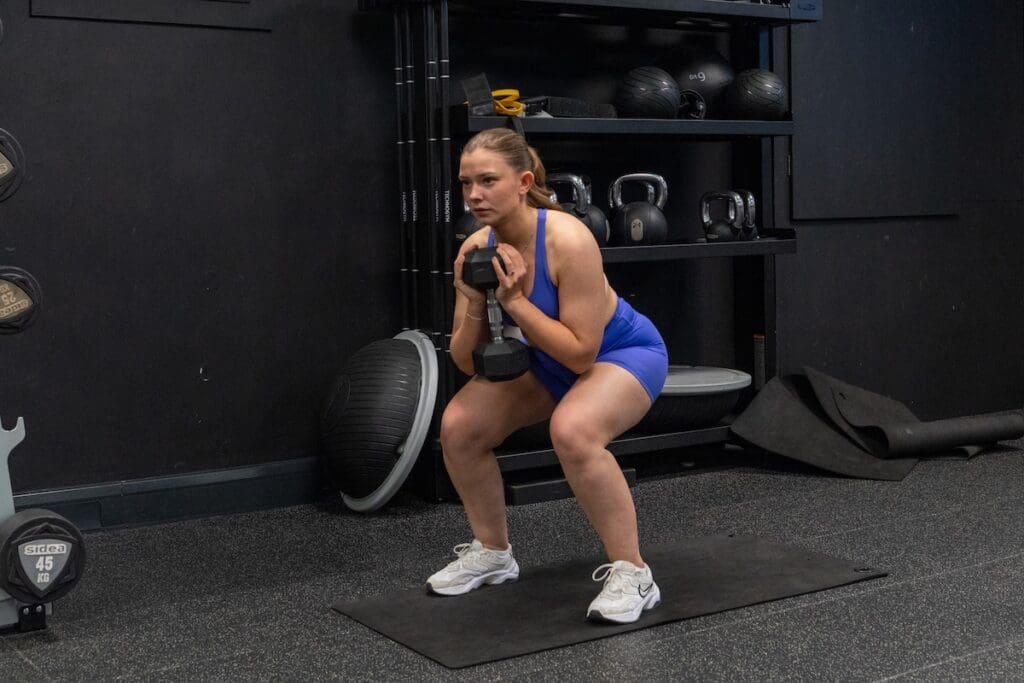
But in a market flooded with self-care tips, it raises the question: is this a way to ‘finally be tuned in to our bodies’ or just another pointless trend?
For 26-year-old ‘Bobbi’ CEO Saffron Howdle, ignoring her inner cues made working out feel way more difficult than it needed to.
“I’d be so motivated for like three weeks, and then suddenly I’d lose all motivation. I thought it was just me being inconsistent,” she says.
Spoiler, It wasn’t.
Like many women out there, Saffron had been following fitness advice which she felt was designed around male bodies, whose hormonal cycles reset daily.
It’s complete bullshit, and once you’ve come to this realisation, the advice to just ‘stay consistent’ starts to feel a bit flaky.
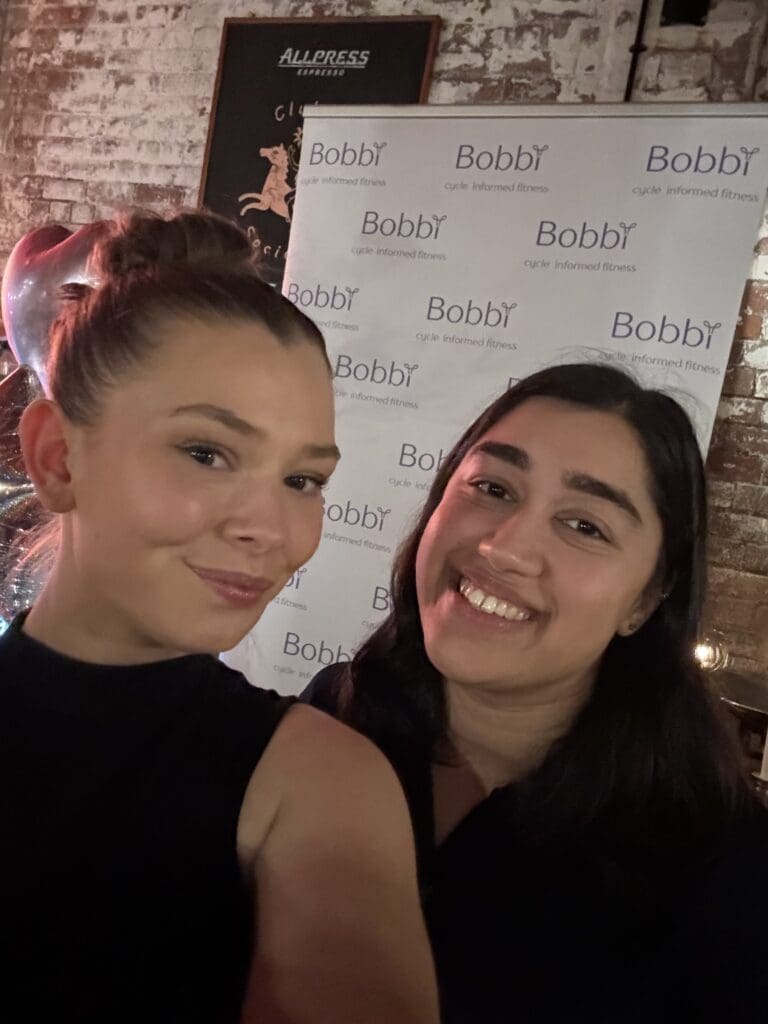
Armed with frustration and curiosity, Saffron, alongside her 27-year-old co-founder Dhruvisha Supeda, launched ‘Bobbi’, a platform that believes all young women should be able to optimise and enjoy fitness at any point in their cycle.
Now, they’re building a fitness app designed to make cycle-based fitness more accessible and, more importantly, less overwhelming.
“We’re desperately trying to take some of the burden off women and, you know, put it almost on a platter,” Saffron says. “It’ll be really easy. Take the advice rather than having to do all the research yourself.”
This is all in hopes of simplifying the process of taking care of your body, because somewhere along the way, it became a full-on research project.
And realistically, you don’t have the time or energy to spend hours scrolling through Google Scholar papers on hormones.
But here’s where it gets complicated.
Cycle-syncing can be helpful, but it can also become a lot to manage, forcing you to keep constant tabs on yourself.
It’s the wellness industry’s favourite trick, after all, to take something obvious and turn it into a set of rules, only to make it feel like you’ve fucked up if you don’t follow them perfectly.
It’s a constant stream of ‘do this’ and ‘actually, never do that’, which makes it near-impossible to ‘honour your flow’. Especially when your ‘for you page’ throws in a new set of fitness commands every thirty-second scroll.
“It’s overwhelming,” Saffron says. “There’s so much information, and not all of it is helpful.”
And that’s putting it lightly.
What’s missing from these conversations is just how frustrating it feels to constantly try to keep up with information that is either contradictory or unreliable.
“It’s not just about understanding your body,” Saffron says. “It’s about navigating the pressure that comes with it.”
Suddenly, it’s not just that you skipped the gym, it’s that you skipped the gym AND ignored your luteal phase; you didn’t only cancel a workout but you ‘failed to listen to your body properly’.
Maybe the real problem isn’t that we’re not doing it properly, it’s that we’re just doing too much.
“If you’re on your feet all day, let’s say you’re a nurse, or you work at hospitals or something, people knock at home gym workouts quite a lot, but they’re really, really effective in reality,” Dhruvisha says. “If you want to do a bit of strength training, callisthenics, or pilates, this is something you can do when you’re waiting for something at home.”
Ultimately, movement doesn’t have to be tracked and ‘perfectly aligned with your hormones’ to count.
You’re not lazy, you’re just not built like a Fitbit.
This is also worth keeping in mind when you look at the bigger picture, because although cycle-syncing seems like it’s been fully figured out, research from the Cleveland Clinic shows cycle-syncing itself has not been properly tested in clinical settings.
So, while we know your hormones shift, what you’re actually supposed to do with that information isn’t that straightforward
There’s no ‘best way’ to train across your cycle, despite what your TikTok feed might suggest.
Part of the problem appears not only to be scientific, but also structural.
Saffron points out that women’s health has historically been underfunded, underresearched and at times, underestimated altogether.
“We’ve been to so many meetings with investors who have said, ‘Well, I don’t think women even want this, and then literally the next day they’ll go, ‘Oh, I talked to my wife, and actually this is a really big issue,’” she says.
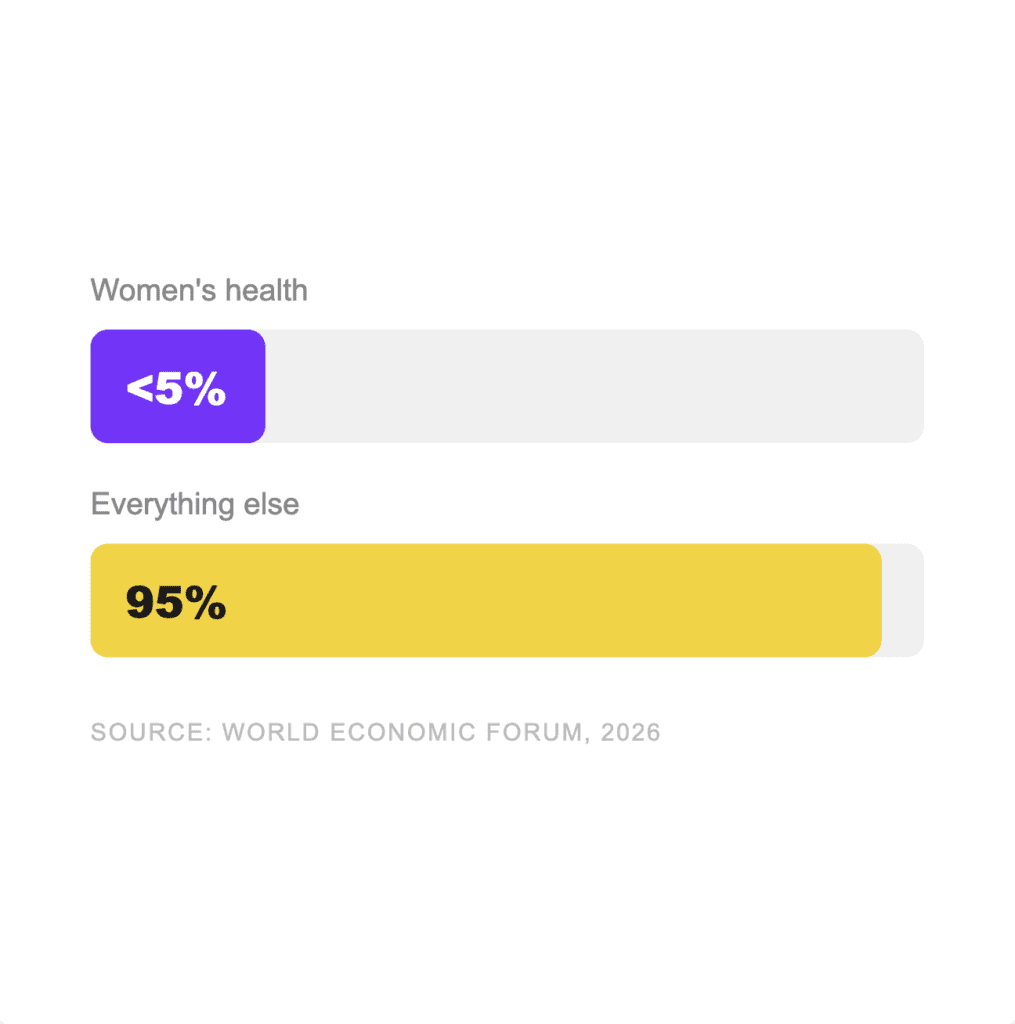
According to the World Economic Forum, women’s health receives less than 5% of global health research funding. Which is fucking wild considering women are literally half the population.
Despite that, both Saffron and Dhruvisha are optimistic about where things are heading.
Saffron points out how quickly conversations around women’s health are already shifting.
“I have a lot of faith that it will get better because people are comfortable talking about menopause now, and a few years ago they weren’t,” she says. “We’re seeing a lot of workplaces really pull forward a menopause policy for their employees.”
Even in a personal ‘at work’ context, Saffron emphasises periods becoming less of a taboo.
“I was fortunate in my last job to have a woman who was my manager, and I could say, ‘Sorry, I was late to this meeting, I needed to change my pad,” she says.
Dhruvisha agrees and thinks that the next generation won’t just sit quietly about it.
“Kids these days are so much more open that by the time they join the workforce,” she says. “They’ll find it very, very weird that anyone ever flinched at any of these words surrounding periods.”
@wearebobbi
At its core, Bobbi emphasises that women’s health isn’t simple, and pretending it is only adds to the unrealistic standards.
And Saffron is keen to encourage women to be more vocal if they’ve faced or felt similar worries.
“We need women to raise their voices and share their stories,” she says. “Be open not just with us but with their partners or anyone with whom they feel comfortable.”
When no one’s talking about it properly, it’s easy to assume the confusion is your problem rather than a systemic one.
“I think the headline for us is just that women’s health is complicated, and I don’t think any woman should feel bad for feeling overwhelmed and confused and irritated by the complexity of it all, the lack of information of it all and the demand of it all,” she says. “I think all I can say is that we get it.”
The goal was never to get it perfectly right, but just to stop getting it so wrong.
Beyond the trends, the apps, and the endless ‘advice’ from micro-influencers claiming they know all, there’s a simple truth: your body is not inconsistent; it’s just not one-dimensional or linear.
Some days you’ll feel strong, and some days you won’t. Importantly, neither of these needs over-analysing.
Cycle syncing or cycle-based training might help you understand patterns, but it’s not a rule book, and it’s definitely not something you can perfect.
The moment ‘listening to your body’ starts feeling like something you’re doing wrong, you’ve probably overthought it.