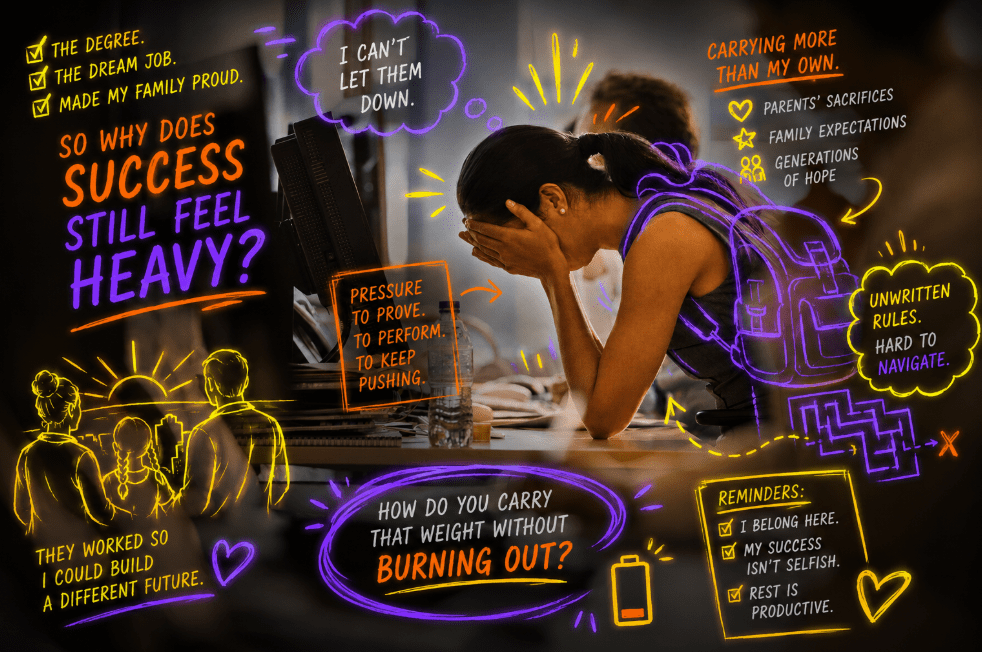

No one talks about how exhausting it is being the one who ‘made it’. You’re supposed to feel lucky, grateful, proud. And you do. But you also carry the weight of everyone who came before you.
The extra internal pressure to make your family proud, not waste a single opportunity, and make something of the doors that were closed to them. It feels fucking relentless.

Dr Anna Kallschmidt is an organizational psychologist and author of the upcoming book ‘The Unwritten Rules of Work: Social Class and Neurodivergent Identities’, whose research focuses on class as an invisible barrier in the workplace.
She says: “There is an implicit expectation within working-class communities that you never forget where you came from and you maintain your values wherever you go. That promise is a source of identity and belonging.
“It’s also a source of chronic anxiety. You’re now navigating a world that was designed by people who don’t share your values, while trying to stay loyal to the people who shaped them.”
And here’s the irony: the admirable values many working-class people grow up with can make burnout more likely. Not because they’re flawed, but because many white-collar workplaces reward visibility and self-promotion just as much as or sometimes even more than performance.
Dr Kallschmidt says: “The working-class cultural value system, which strongly values hard work is built for survival, not for thriving.
“When a first-generation professional succeeds, those values don’t disappear. They get redirected. The pride in hard work that once got you out becomes the pressure that keeps you running long after you’ve arrived.
“Social class transitioners have a skillset others do not have. They are great at communicating with people who are different than them, but it often burns them out.”
Often first-gen professional women feel this burden even more strongly.
They’re not just carrying the pressure of making their family proud and making all those sacrifices count. They’re also battling the sexism that continues to shape so many workplaces.
It’s exhausting trying to break class barriers when you’re still expected to fight gender ones too.
But where’s the line between gratitude and guilt? Between honouring the sacrifices your family made and feeling responsible for making every single one of them pay off?
Dr Kallschmidt says: “Gratitude is appropriate and healthy. Guilt is not. For first-generation professionals, the shift happens when the sacrifices their families made become an implicit debt rather than a gift.”
“My research participants frequently described a version of what psychologists call survivor guilt, the discomfort of having made it when others didn’t, or when the people who sacrificed for you are still in the same circumstances you escaped.”
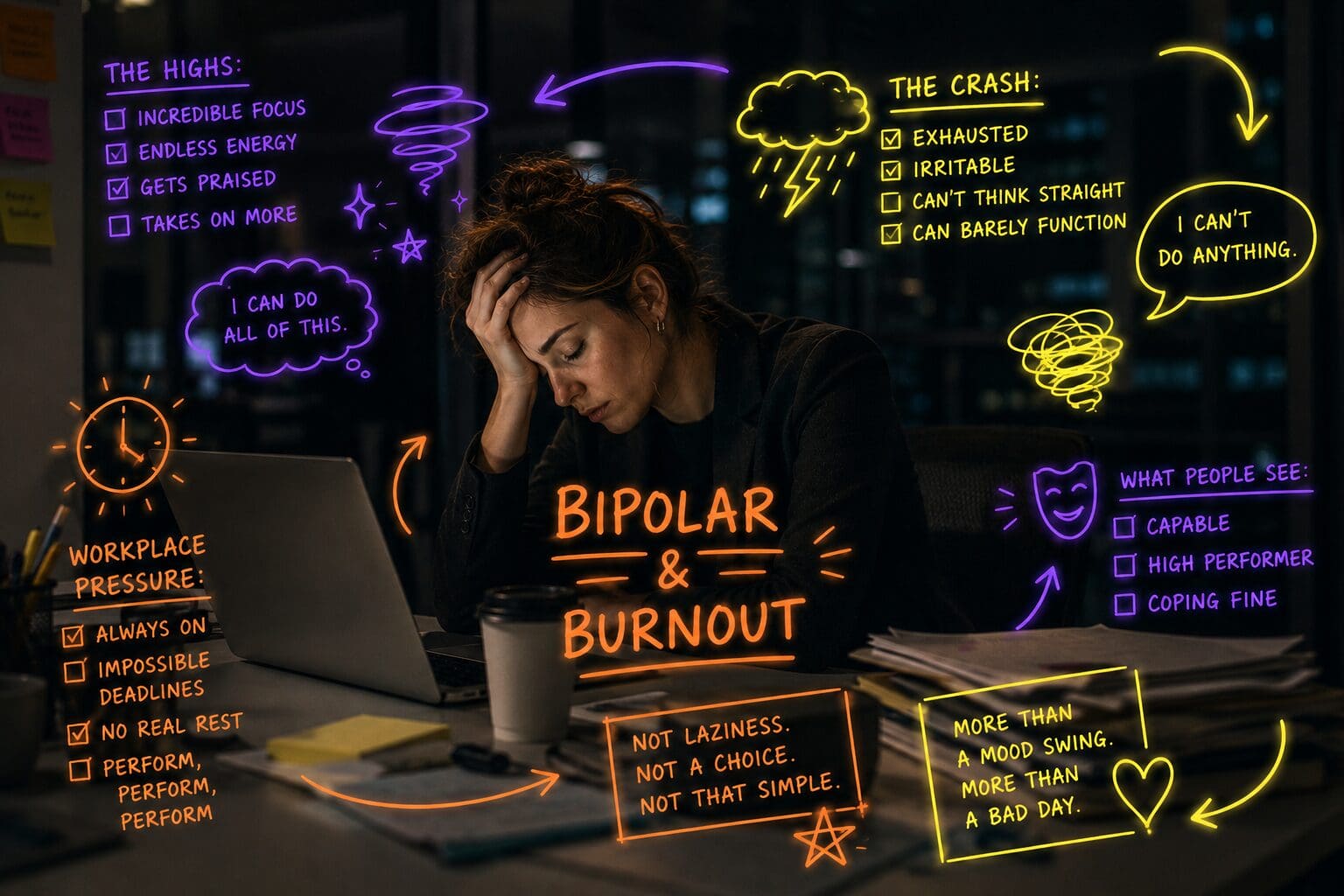
This guilt often shows up in the way we ignore our own limits. We brush off physical pain, normalise burnout, and keep going long after our bodies are screaming at us to stop.
“For example, if you had parents who lift heavy materials or get on their hands and knees to do physical work, your back hurting from being in an unnatural desk position all day can feel minor,” Dr Kallschmidt says. “You might dismiss your burnout from being overworked, and the emotional labor of dealing with office politics.
“The impact is real. But it’s less tangible. And because it’s less tangible, many first-gens don’t feel the right to acknowledge the burden and invest in resources to support themselves through it.
“But gratitude doesn’t mean you have infinite resources or that you owe a debt. If you give it ‘everything’ you’ll actually see counterproductive returns. Your work quality will go down. You won’t see the long-term rewards of your work.”
@drkallschmidt Anybody felt this? #identity #socialclass #bootstraps #firstgen #guilt ♬ original sound – Dr. Anna K
And the really frustrating part? Working yourself into the ground doesn’t just tank the quality of your work, it often isn’t what gets rewarded in white-collar industries. So the extra hours, the missed lunches, the constant grind you’re using to outrun the guilt? They might be making you miserable without actually moving you forward. It’s a pretty shitty trade-off.
Dr Kallschmidt says: “Unfortunately, what gets you ahead is the unwritten rules, which are largely about relationships. How you communicate, resolve conflict, and speak about yourself. If you’ve burned yourself out working too hard, you will not have the energy to do the latter.”
And this can be difficult for first-gen professionals. You’re working incredibly hard to make your family proud, yet they may not fully understand the career you’ve worked so hard to build. Anna says some of her clients are even mocked by relatives who dismiss their work as ‘not a real job’.
“Working-class families tell their kids to stick their head down and work really hard and somebody will notice. That’s not true in white-collar work. With less tangible output, there’s less room for interpretation. So the advice your family has given you is not ill-intended, but it will not set you up for success,” she says.
“What I’m getting at here is, the ‘work smarter not harder’ mantra applies. But the ‘smarter’ involves invisible cultural nuances. Your family will likely not understand this and not recognize it as work, but they will understand the payoff.”
There are ways to stop guilt, pressure and obligation from becoming a one-way ticket to burnout.
Dr Kallschmidt says: “There will be ‘sprints’, but the most effective, long-term strategy is to build relationships and develop a cross-cultural toolkit. Women are already better prepared for this soft skill development, though less rewarded for it, and working-class values prepare us well for building community though it’s harder in a new environment with different values.
“It comes down to individual vs interdependent values. The working class and women are more interdependent. Corporate America, middle-class and higher-class America, and men are more individualistic.
“It is a painful tango to navigate the individualistic demands when you’ve been raised to care about a community. It’s also hard to know when to choose yourself, and to feel like doing so is at the expense of a community.”
It can feel like you’re carrying the weight of generations of hopes, expectations and sacrifices on your shoulders. But this is your life, not a community service project. You don’t have to set yourself on fire to prove their sacrifices were worth it.
“There is not one right way to be successful. Your happiness and success is not at the expense of theirs,” Dr Kallschmidt says. “I’m a big believer in ‘do no harm but take no shit.’ Nobody else loses anything from your happiness.
“Choose your mental health. It won’t serve your family or yourself to lose it.”