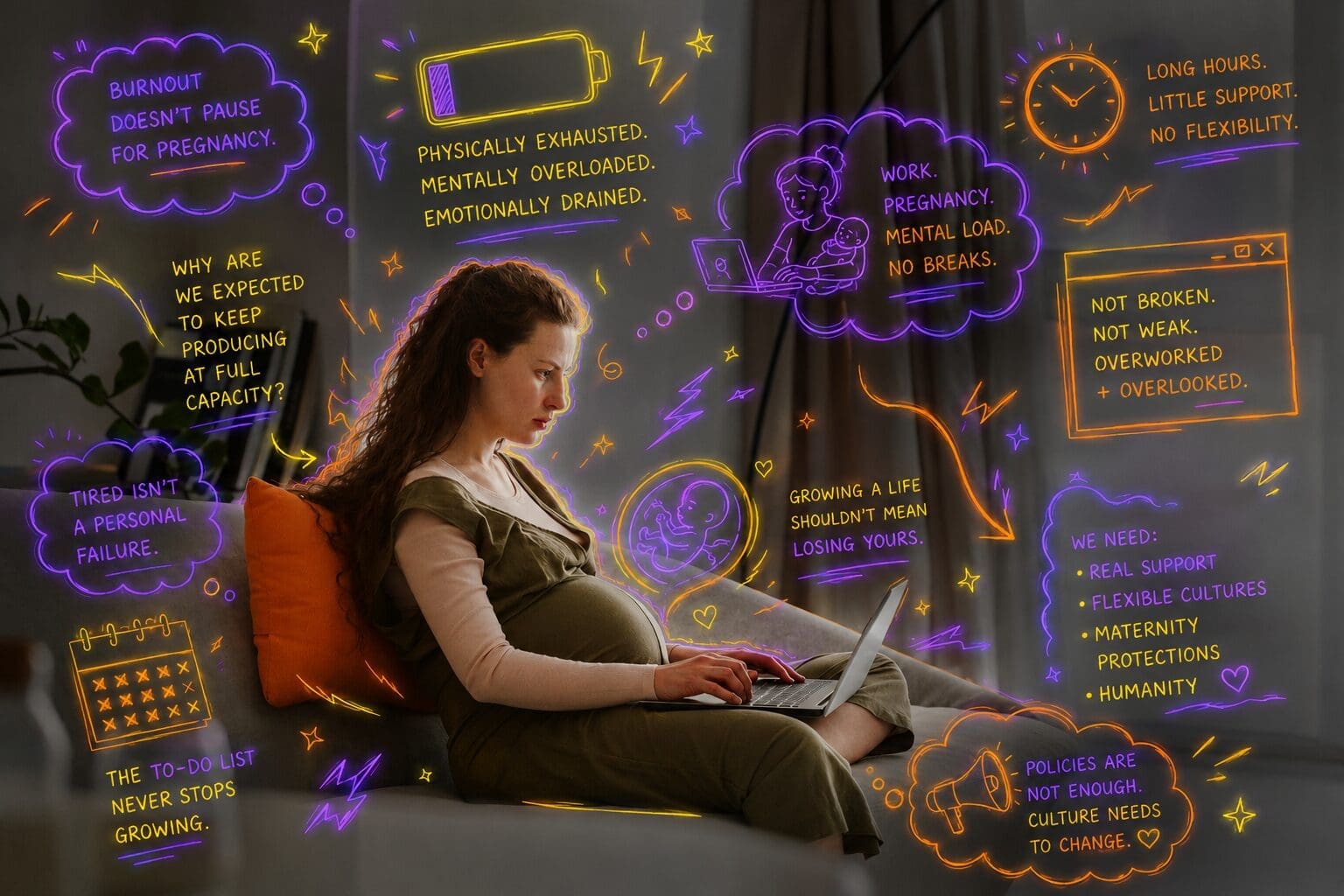

Emails don’t stop when overwhelming nausea begins.
6 am starts don’t cease after sleepless nights.
The unspoken expectation to keep producing, while suffering through the shitty side-effects of being pregnant, is one working women have come to accept.
But burnout during pregnancy isn’t inevitable.
The responsibility to prevent it falls on employers, the question is whether they want to.
Dr Alexandra Lautarescu, Postdoctoral Research Associate in Developmental Neuroscience and Neuroimaging, conducted the WANDA study to understand mental health in pregnant women across different neurotypes.

The workplace came up repeatedly.
“Sometimes employers positively respond to these symptoms, and sometimes they don’t,” she says.
The burnout isn’t coming from an insane workload; It’s coming from a stream of constant fatigue or insomnia that are met without any fucking understanding.
“We as researchers need to do a better job of educating the public on prenatal stress,” Lautarescu says.
Postnatal depression is widely understood. The mental health struggles women face while actually pregnant? Not so much.
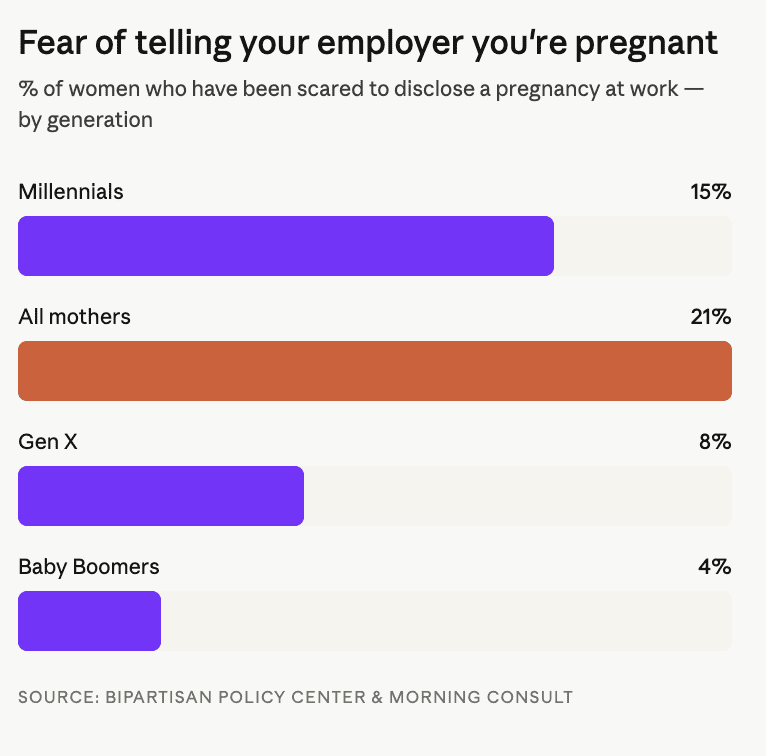
According to a Bipartisan Policy Center survey, 21% of mothers say they have been scared to tell their employers about their pregnancies due to fear of discrimination or retaliation
On whether chronic stress affects the baby, Lautarescu is careful.
“The short answer is we do not really know,” she says.
Vivette Glover, Professor of Perinatal Psychobiology at Imperial College London, points to what actually helps.
“Different women find different things helpful,” she says – citing music therapy, yoga, talking therapies and antidepressants.
“There should be much more understanding by employers to follow what the women themselves want,” she says. “Some women thrive when it is really stressful, while some women think it is all too much.”
Accommodating pregnant workers isn’t special treatment. It’s the bare fucking minimum.