

In an era where busy schedules, family commitments and geographical distance can make meeting new people difficult, colleagues often become more than coworkers. They become lunch companions, confidantes, sounding boards and, sometimes, our closest friends.
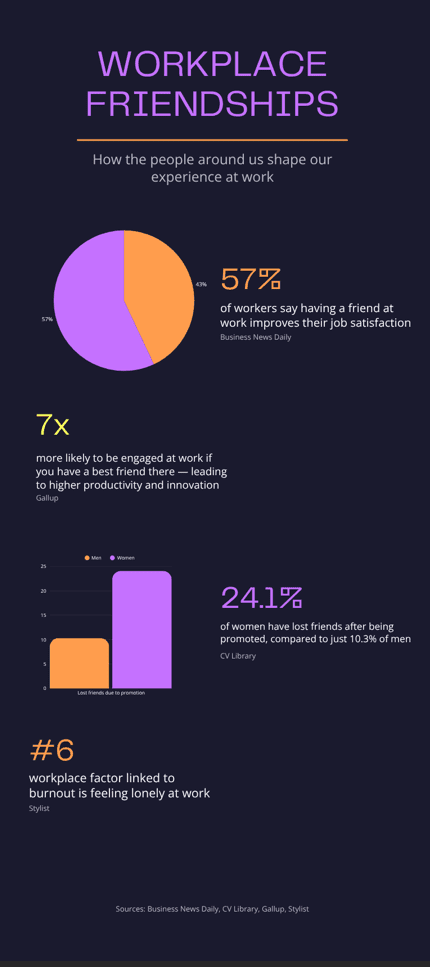
Research suggests these relationships are more important than we might think. Gallup data has found that employees who have a best friend at work are more likely to be engaged, productive and innovative, while a 2021 workplace happiness survey found that 57 per cent of workers believed having a friend at work improved their job satisfaction.
So when your work bestie quits, gets let go, is reorganised in the company or basically anything that steals them from you, it fucking sucks.
For Lauren Farmer (not her real name), 27, the shift happened after a promotion.
In her previous role in advertising, she had formed a close-knit trio with two colleagues who quickly became part of her daily life.
“We would make sure that we all had our lunches at the same time, and we’d go to the park, sit on the swings, go through the charity shops,” she says.
“We’d have takeaway nights at my flat and Mamma Mia watching parties. We were always the little group together, people even called us the troublesome trio.”
But when Lauren’s role changed, the friendship dynamics changed too.
“We went from working on projects together to me having to ask them to make the projects and send things to me for sign-off,” she says.
“We still got on well, but I suddenly felt a lot more lonely.”
The change wasn’t dramatic. There was no argument or falling out. Instead, Lauren describes a gradual drift.
“It was maybe a month before I started to actually notice it,” she says.
“I’d text and be like, ‘Can we do lunch at half one because I’ve got a meeting at 12?’ Then I’d come out of my meeting and realise they’d already left the office.
“I went from having a little community, a little group to lean on and something to look forward to in the day, to feeling isolated. I wouldn’t take my lunch break. I’d work through to the end of the day and I’d leave work by myself.”
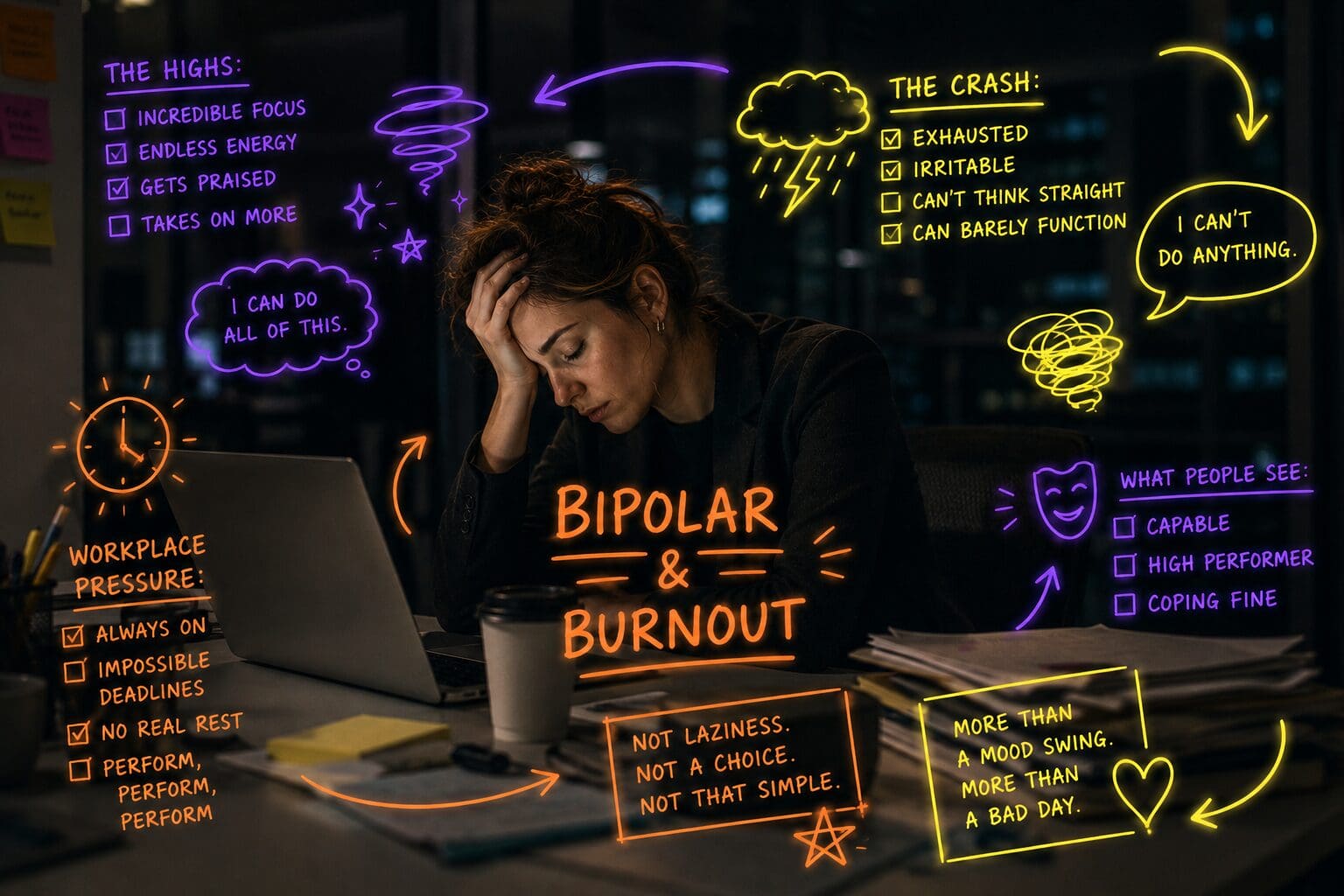
Research has found that feeling lonely at work is one of the biggest workplace factors of burnout.
“It absolutely had an impact on my wellbeing,” Lauren says.
“I ended up getting really ill to the point where my doctor was really worried about my health because of how much I was just working and working and working. About four months later, I ended up handing my resignation and leaving.”
Studies have proven that this issue disproportionately affects women in the workplace. Research for CV library found that 24.1% of women have lost friends after being promoted, compared to 10.3% of men.
For Philly Walton, 25, the loss came in a different way.
She became close friends with a fellow paralegal who joined her law firm at the same time.
“We would go for lunch together, text a lot in the evenings and hang out in the office,” she says.
Then, her work friend was let go, and office life changed as Philly knew it.
“It was the right call for her to be let go, definitely,” she says. “But obviously, when she left, I didn’t have anyone.
“I did kind of feel like I was back at square one, other friendships were already established. It was hard for me to break into that friendship group.”
For Lauren, the experience changed how she thinks about friendship as an adult.
“I think it actually taught me to cherish the people that do stick around a lot more,” she says.
“My coworkers now all now have shared calendars so we can make sure that we get to see each other at least once a month.”
Philly took away a different lesson.

“As bad as it sounds, I think don’t get too close to people at work,” she says.
“You can obviously get on with people, but remember you’re probably friends with them because you see them every day.”
Different conclusions, but the same underlying reality: workplace friendships can become some of the most meaningful relationships in our lives. And when they change, whether through a promotion, resignation or dismissal, the sense of loss can follow us long after the desks have been rearranged.
There’s no ‘one size fits all’ advice, and it’s always shit. But one thing that both Lauren and Philly said is that they wish they had made more of an effort with others in the office.
“I think if I had made a bigger effort with the other girls, I wouldn’t have felt so alone after my friend left,” says Philly.
“I was left with people I’d never really spoken to that I didn’t know and were a lot older than me. So it was isolating because I didn’t know anyone else,” echoes Lauren.
Maybe expanding your workplace social circle, is the best way to shield your heart from the bestie breakups.