
The interview was going well until they said it.
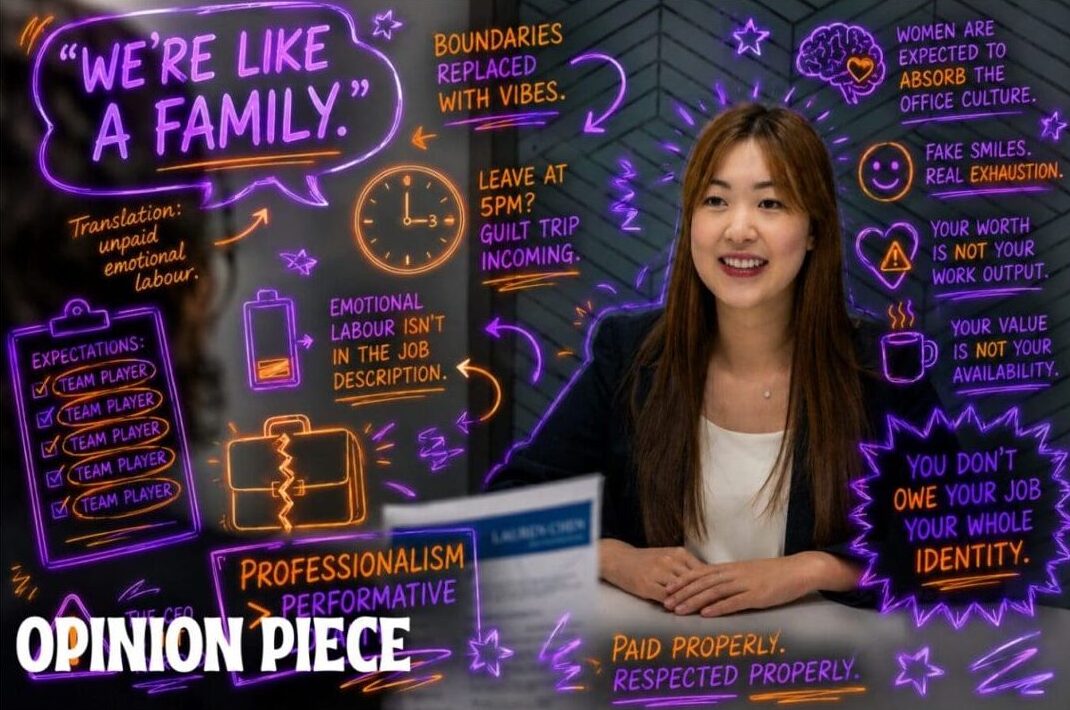
“What I love about working here,” my potential future manager smiled, “is that we’re really like a family.”
Fuck.
I should have stood up and walked out then. Instead, I took the job.
Two years later, I quit in tears at 11 PM on a Tuesday. Which, in hindsight, was very on brand for our little ‘family’.
Let me save you the trouble: ‘we’re like a family here’ is not a compliment. It’s a warning. It’s the workplace equivalent of a Tinder bio saying ‘I’m not like other guys’. Run.
What it actually means: we will guilt-trip you into staying late. We will expect you to care more about this company than is reasonable, healthy, or compensated. We will blur every professional boundary in the name of belonging. And when we inevitably exploit you, we’ll frame it as something you owe us. Because that’s what family does, right?
Wrong. That’s what bad family does. And we don’t need to be replicating that dynamic at work, thank you very much.
You don’t have a contract with your family. You don’t get paid overtime by your mum. You can’t sue your dad for unfair dismissal. Family is the one relationship in life where the rules of fairness don’t apply, where love is expected to override every other consideration. Which is exactly why companies want to claim the label.
Convenient, isn’t it.
Real workplaces are professional relationships with clear terms. You provide labour. They provide compensation. You both agree on the boundaries of that exchange. When either party violates the terms, the relationship can end. That’s not cold. That’s not transactional. That’s just how employment works.
But when your boss tells you the company is family, they’re not offering you love. They’re hoping you’ll behave like a daughter: dedicated, self-sacrificing, eager to please, never demanding too much, never leaving even when you should. They’re priming you to accept poor treatment because ‘we’re all in this together’.
We’re not all in this together. They’re paying you. That is the whole relationship. The CEO is not your dad. Your manager is not your mum. Karen from HR is absolutely not your auntie, no matter how many ‘team bonding’ yoga sessions she organises.
It’s bullshit.
The ‘family’ framing is also particularly weaponised against women. We’re already conditioned to absorb emotional labour, keep the peace, and prioritise others’ needs. According to a Samsung-commissioned UK survey of 2,000 employees, women are three times more likely than men to be asked to do non-work office tasks: making the tea, organising the leaving card, planning the team day out. Tell a woman her workplace is family, and she’ll instinctively start managing the team’s moods, planning the birthday cards, and listening to the new starter cry in the toilets at 3 PM.



This is bullshit. All of which she’ll do for free. Because family, right?
It’s not a coincidence that the companies demanding the most, paying the least, and respecting boundaries the worst lean hardest on this rhetoric. Watch which workplaces describe themselves as a ‘family.’ Then watch their staff turnover. Then check Glassdoor. The receipts are always there.
The phrase is doing very specific work. It’s there to make you feel guilty about leaving at 5 PM. To make you feel selfish for asking about salary bands. To make you feel ungrateful for taking a better offer elsewhere. It exists to convert reasonable workplace boundaries into emotional betrayals.
“I really thought you were one of us.”
“After everything we’ve done for you.”
“This is going to leave a real gap.”
Oh fuck off.
Here’s what you actually want from a workplace: A manager who treats you with respect. Colleagues who do their actual jobs. The ability to leave at the end of the day and become a person again.
None of this requires affection or loyalty or family-feeling. It requires professionalism. The bare fucking minimum, basically.
When the family rhetoric kicks in, what’s almost always missing is professionalism. The boundaries that should be in writing get replaced with vibes. The compensation that should reflect your value gets replaced with “we appreciate everything you do” (translation: please don’t ask for a raise).
The promotion that should reflect your work gets replaced with “you’re going to be such an important part of this next chapter,” (translation: same job, more work, no pay rise).
You don’t need to be important. You need to be paid properly and respected as a worker. Wild concept it seems.
Here’s a test: if your workplace really were a family, you could ask them for a £10,000 unsecured loan, refuse to come in for three weeks because you didn’t feel like it, and tell your boss exactly what you think of her shoes. Try any of those things and watch how quickly the family illusion shatters. Watch the HR meeting get scheduled before you’ve even finished the sentence.
So, the next time someone tells you the company is ‘like a family’, ask yourself: would an ideal family treat you like that?
If not, cal bullshit, as ‘we’re like a family’ is the biggest employment red flag there is.