
There’s a very specific kind of exhaustion that comes from being a woman at work, and it’s not always the actual job that drains you.
It’s the constant self-editing.
The rehearsing before meetings. The carefully softened emails. The strategic exclamation marks. The split-second calculations about whether disagreeing with someone will make you look “cocky” or “difficult”.
It’s realising you can’t just be competent. You also have to be pleasant about it.
Meanwhile some bloke named Dan can interrupt six people in a meeting, say the exact same thing you said ten minutes earlier in a deeper voice, and somehow leave with a reputation for ‘strong leadership qualities’.
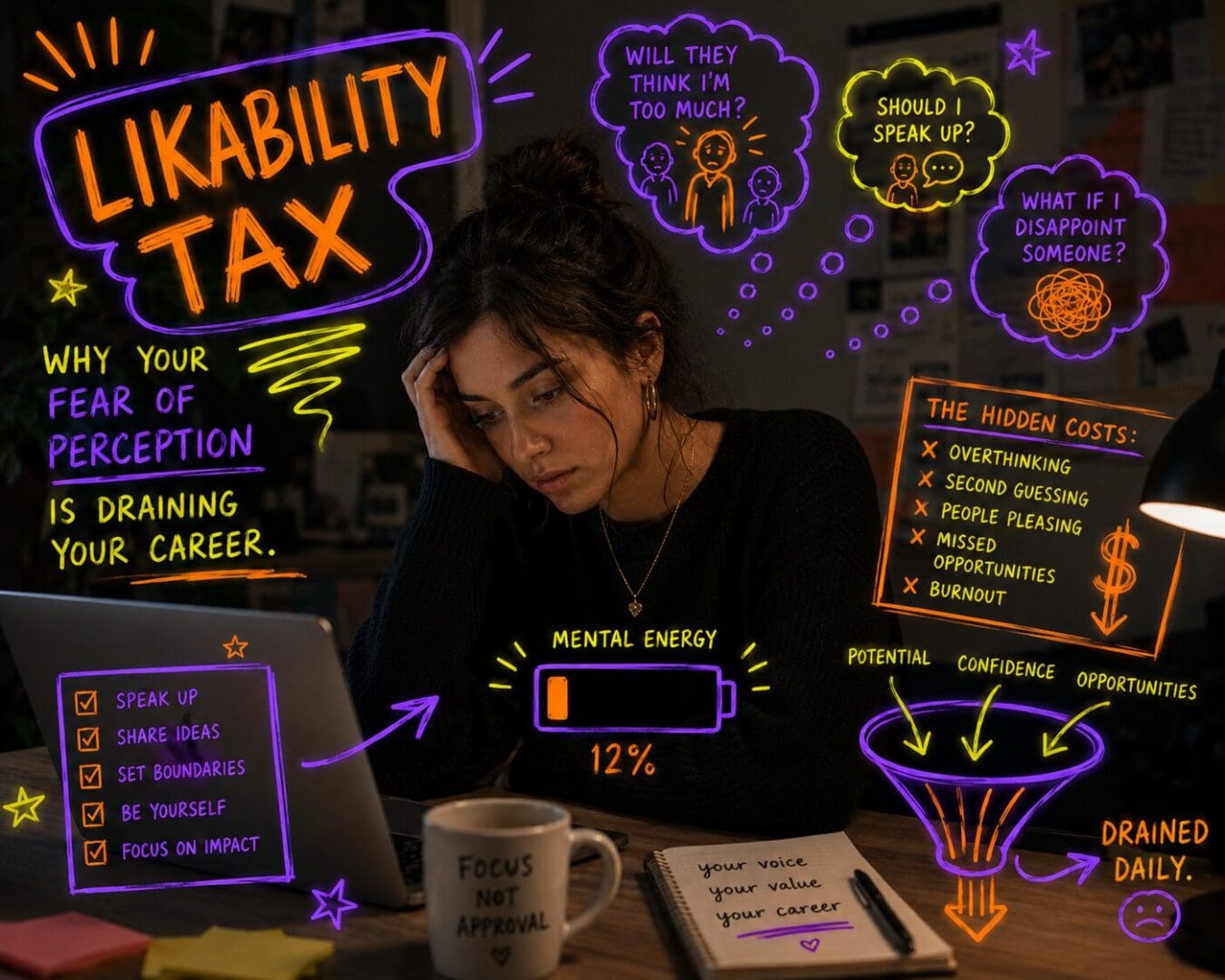
That balancing act has a name: the likability tax.
And according to gender bias researcher, Professor Joan Williams, women are still getting hammered by it.
“In many, many workplaces, a much broader range of behaviour is accepted from men than from women,” Williams says.
“If a man gets angry, well, that’s just him. Or if he’s constantly interrupting, he’s ambitious. But if a woman gets angry or interrupts, she has a personality problem. Who does she think she is? She’s a prima donna.”
There it is. The whole thing.
Men get interpreted through the lens of competence. Women get interpreted through the lens of likability.
Williams calls this “tightrope bias”, and honestly it’s one of the clearest explanations of modern workplace sexism I’ve ever heard.
Williams says: “Tightrope bias refers to women having to walk a fine line between being liked but not respected, or respected but not liked.

“Women have to behave in ways that are authoritative and ambitious if they want to get ahead,” she says. “But women often are penalised for behaving in ways that are authoritative and ambitious.
“So men just have to behave in ways that are authoritative and ambitious, but women walk this tightrope between being seen as too authoritative and ambitious, or too masculine, and therefore unlikeable. Or as being insufficiently authoritative and ambitious, too feminine, and so unqualified.”
Which basically translates to: Be assertive, but not too assertive. Speak up, but don’t dominate. Be confident, but don’t make anyone uncomfortable. Be ambitious, but somehow also endlessly agreeable.
It’s fucking exhausting.
And the worst part is that most women know exactly what this feels like before they even enter the workforce.
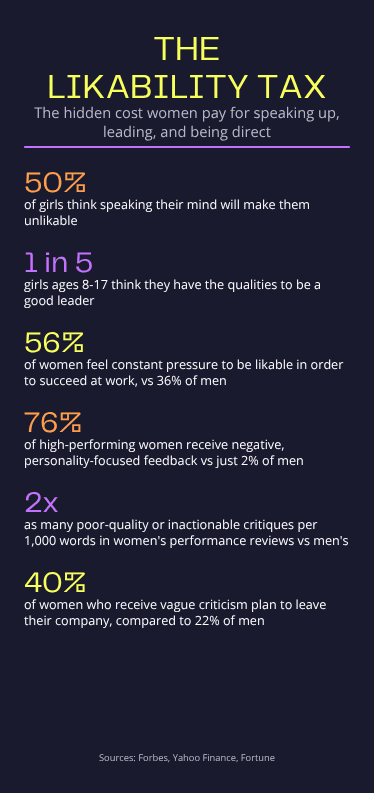
Forbes found that only one in five girls aged 8–17 believe they have the qualities to be a good leader.
Eight years old and already learning that being liked matters more than being heard. Grim.
Then women grow up and enter workplaces where the exact same bullshit gets professionally repackaged as “culture fit”.
Williams described how exhausting it becomes constantly managing how you’re perceived at work.
“If you’re in a meeting and you don’t agree with the direction that’s being taken, you always have in the back of your mind that you have to really control your tone very carefully,” she says. “You have to control the number of times you talk very carefully.”
And honestly, every woman reading that probably felt it in her chest a little bit.
Because this isn’t just about behaviour. It’s about perception. And perception is deeply tied to stereotypes people often don’t even realise they’re carrying.
Williams recalled a woman who was talking about her experience working in a large tech company. She says: “There were only 2 women. She, a black woman, and her colleague, an Asian American woman.
“The black woman said she had talked very little, and the Asian American woman had talked quite a bit, but she heard later through the grapevine that she had dominated the meeting, and the Asian American hadn’t said anything.
“Those stereotypes were stronger than reality. Stereotypes were shaping what people remembered happened.”
Honestly? That should fucking terrify people.
Because women are not just managing their actual behaviour. They’re managing assumptions before they’ve even opened their mouths.
And over time, that becomes completely too much.
“I’ve seen a lot of highly successful women decided they’re done. Done having to prove themselves every second,” she says. “They were done having to walk on tippy toes so as not to be seen as unlikeable.”
That’s the thing about the likability tax. It’s rarely one huge dramatic moment. It’s death by a thousand tiny self-corrections.
Checking your tone.
Checking your face.
Checking whether you sound ‘too emotional.’
Checking whether disagreeing with someone will somehow become your defining personality trait for the next six months.
And men, overwhelmingly, simply do not have to do that to the same extent.
Williams says: “White men don’t have to do any of that. They just charge straight ahead, and a very broad range of behaviour is accepted from them, and even forms of misbehaviour are often excused.”
Meanwhile women are out here performing emotional calculus before asking a colleague to update a spreadsheet.
And despite decades of research into gender bias, Williams isn’t optimistic this will naturally disappear.
“Not hopeful at all,” she says. “It’s just not going to change without a reboot.”
Not another corporate panel discussion with dry pastries and LinkedIn buzzwords.
Not another company posting ‘We hear women’ once a year in March.
An actual structural reboot.
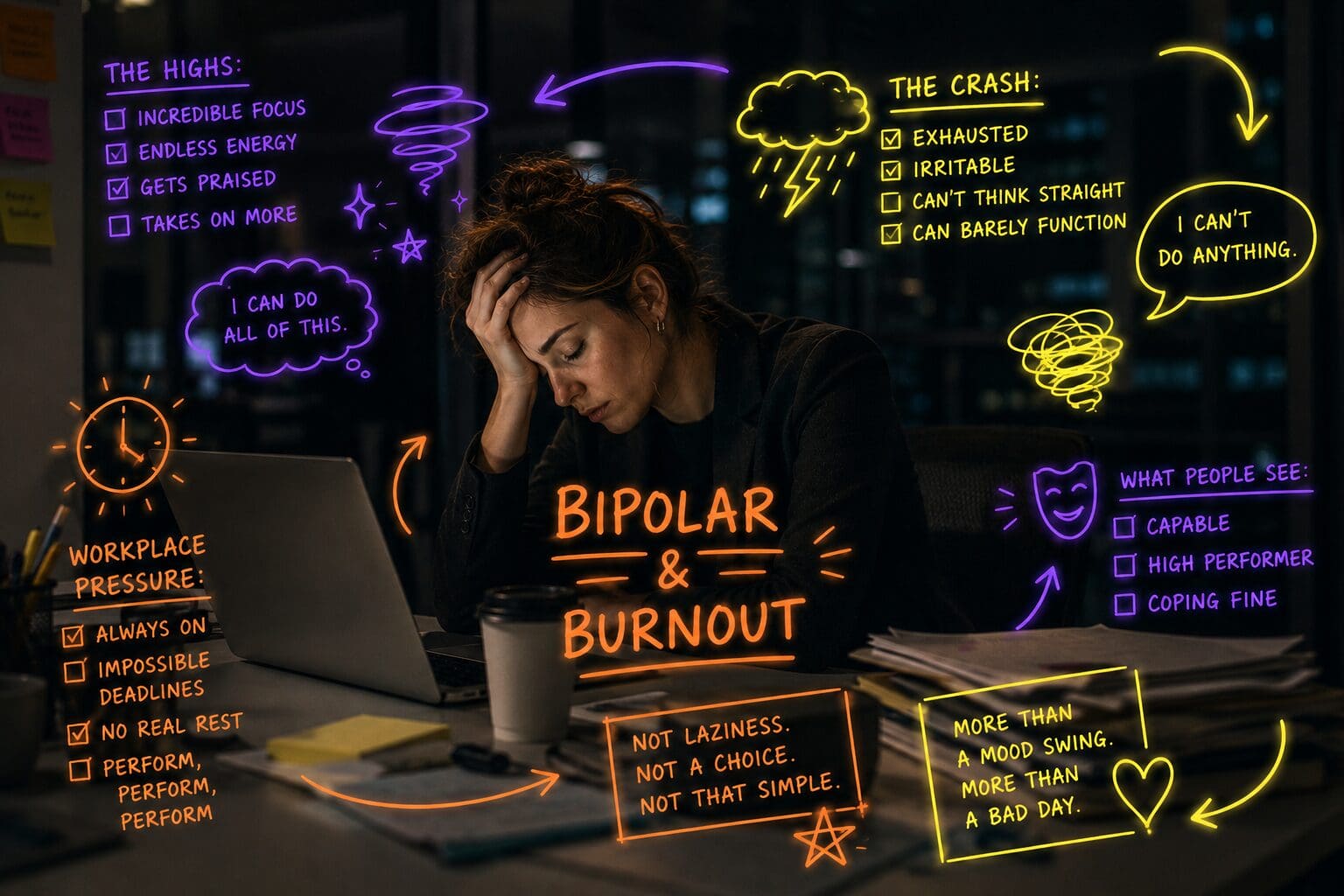
Because women are not burning out because they’re weak. They’re burning out because constantly managing everybody else’s comfort on top of your own workload is fucking exhausting.