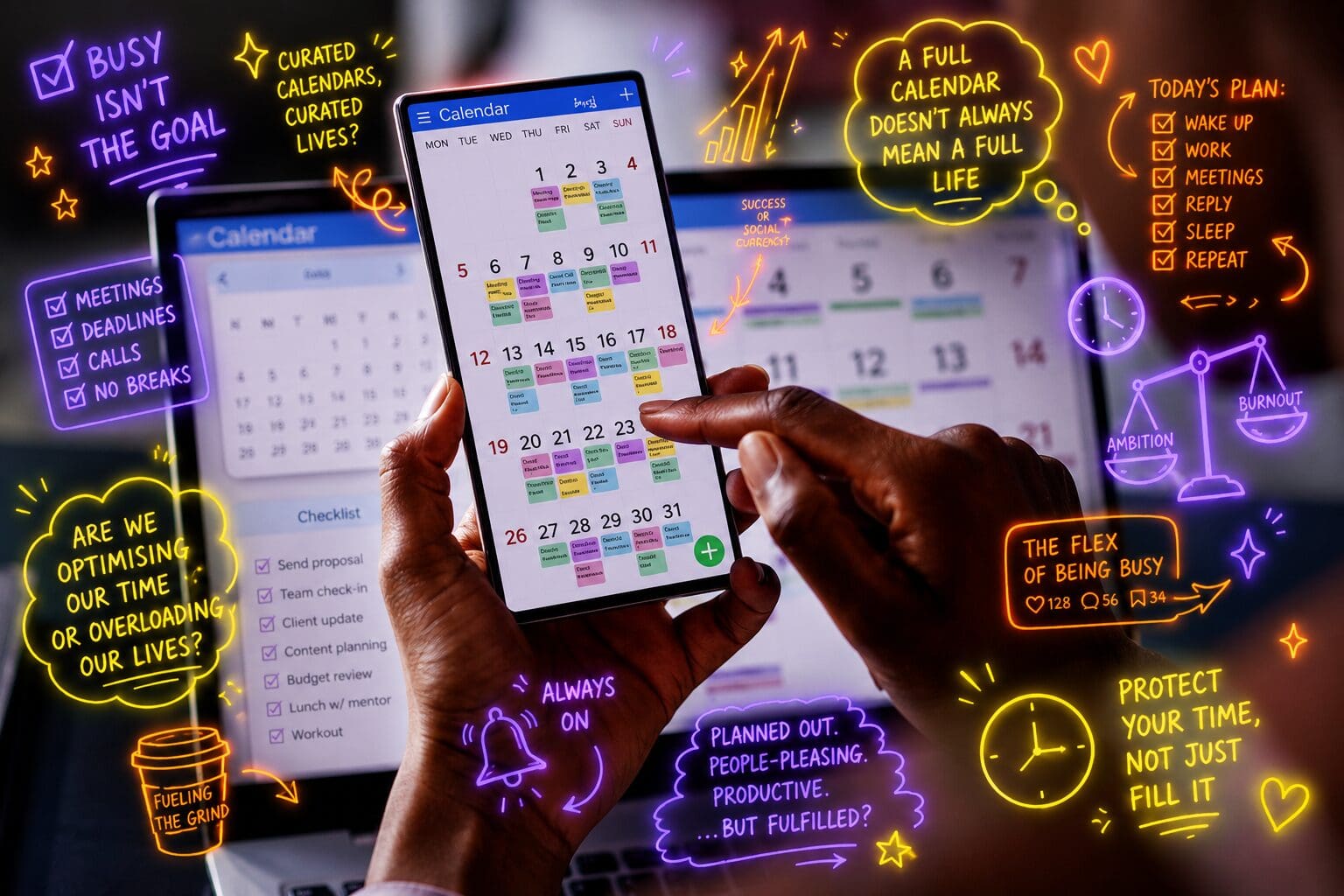

Having to ‘check the calendar’ to see your own friends used to feel absurd, now, it’s completely normal.
Somewhere between colour-coded Google calendars, ‘day in my life’ TikToks, and the slow creep of productivity culture, being busy stopped being stressful and started becoming aspirational.
Busyness is no longer a side effect of modern life, it’s a fucking personality trait.
Optimisation culture has trained us to see unscheduled time as suspicious. If you’re not constantly occupied, then what the hell are you doing?
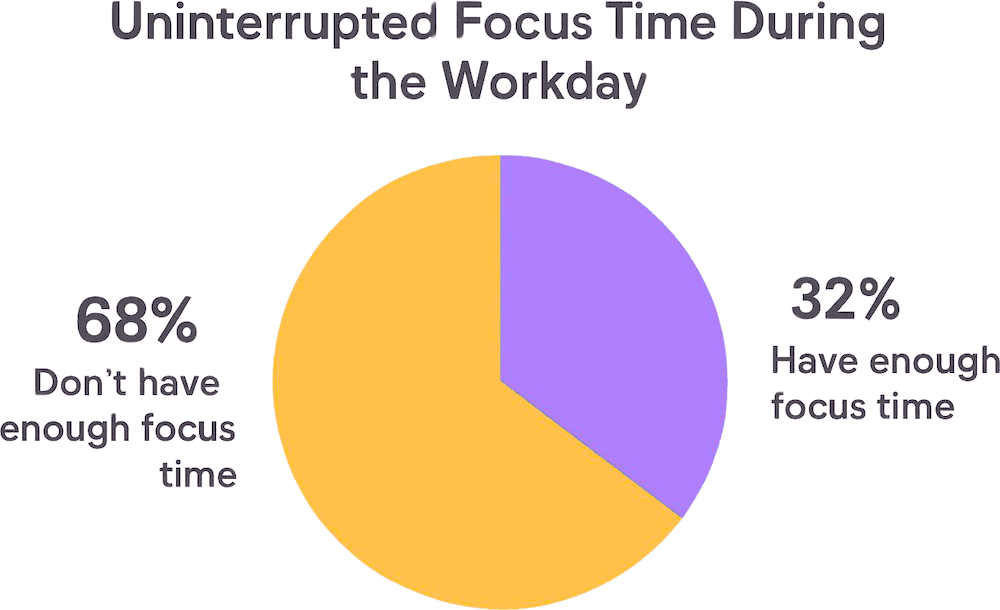
According to Microsoft’s Work Trend Index, 68% of people say they don’t have enough uninterrupted focus time during the work day.
For Cary Cooper. Professor of Organisational Psychology and Health at the University of Manchester, the problem isn’t simply that we’re busy, it’s that we’re crowding out the very conditions that allow good work to happen.
“We need space in our working day and working week to reflect on new ideas, new products, new services, if your diary is all packed out, when are you going to do that? You’re not being creative, you’re just playing a game,” he says.
Progress requires pauses, reflection requires gaps. Still, many modern working days are dominated by constant fucking coordination.
At times it feels as if we’re trying to emulate the hyper-organised lifestyle popularised by figures like Steven Bartlett.
@shwinnabego
Cooper believes part of the problem stems from workplace habits spilling into our personal lives. Meetings spill into working weeks, taking up valuable time that could be spent thinking or making decisions independently.
“Most meetings are unnecessary, at least for the length of time they’re done,” he says.
The irony is that tools which have been designed to help us manage our time actually end up consuming it.
Social media would have you think that this is most common among women, but Cooper argues otherwise.
“I’d rather have a woman manager than a male manager. They’re more flexible. They fill less of their diary less because they don’t need to impress anybody, they just get on with their job,” he says.
In workplaces where responsiveness is always visible and availability is constantly measured, busyness has become evidence of ambition.
“I don’t think it’s about productivity at all, I think it’s about communicating ‘I’m an important person’ and the way you do that is to show seven days a week, you’re busy, you don’t have 15 minutes in your diary that are not already consumed,” Cooper says. “There are people who are so ambitious they want to tell everybody they’re indispensable.”
The question is, why does anyone feel the need to demonstrate this in the first place?

Prof. Sir Cary Cooper CBE
50th Anniversary Professor of Organizational Psychology & Health at ALLIANCE MANCHESTER BUSINESS SCHOOL
View Profile“Why would you need other people to see your diary? If you’re doing it, there’s a reason behind why you’re doing it psychologically,” Cooper says.
Instead of wondering how to fit more into our schedules, maybe we should be asking whether fuller calendars are something worth aspiring to at all.
An empty slot in a calendar isn’t necessarily a problem to solve. It’s where you get the space to think beyond the next fucking notification or deadline.
Cooper argues that the danger of calendar culture is that it mistakes activity for achievement.
A full diary might look impressive on the surface, but it doesn’t necessarily mean good work is being done.
“What saves your job is doing a good job, not having an extra full diary,” Cooper says.
In our rush to fill every hour we’ve stoped seeing how harmful chronic busyness is.