
Workplace fashion is supposed to be simple. Get dressed, show up, do your job.
But whether we admit it or not, we’re constantly sizing each other up; a suit says ‘authority’, a tattoo, the opposite.
Before you’ve spoken a word, people have already made assumptions about who you are, how competent you seem and whether you belong in the room.
Vanessa Friedman is a fashion director and chief fashion critic of The New York Times.
“Clothing influences every decision, every judgement we make about each other. Period,” she says. “Whether someone is capable, trustworthy, efficient, or responsible. Whether they’re powerful, whether they’re creative, you know, it’s a form of communication,”
It’s shitty, but people love to judge a book by its cover – they just don’t like owning up to it.
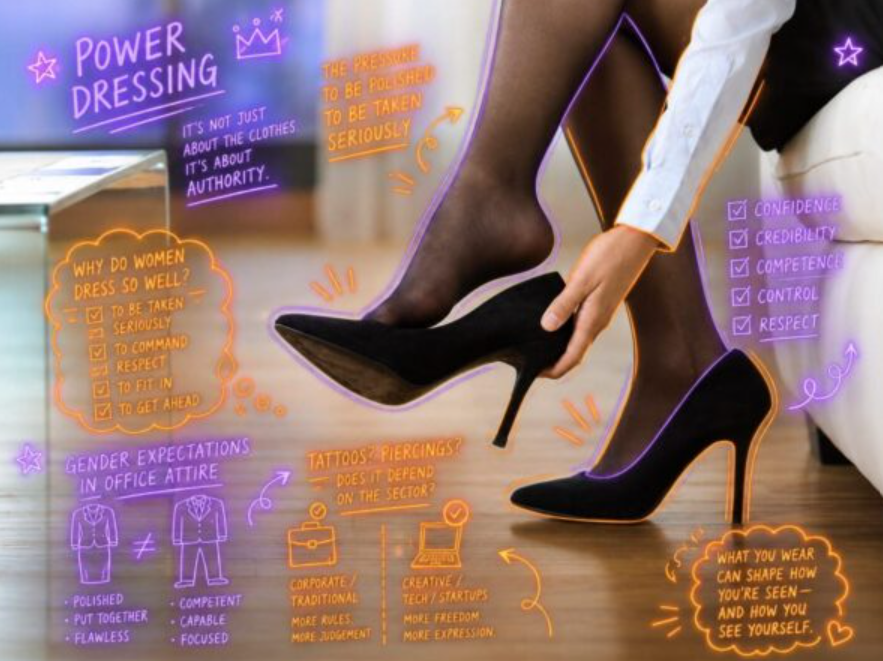
We’ve created a whole fucking clothing category dedicated to it… power dressing.
When people hear the phrase, they picture the 80s. Giant shoulder pads, sharp suits and enough corporate aggression to terrify an entire boardroom.
But according to fashion psychologist Dr Dawnn Karen, the idea has evolved.
“Power dressing today has a stronger mental health component. Now, it is more individualistic. It’s what makes you feel powerful,” she says. “It’s about regulating your nervous system to be more productive.”
The modern version isn’t necessarily a navy suit or red dress; it’s whatever helps you walk into a room with confidence.
For some, this is heels; for others, it’s whatever is cleanest and closest to the door.
Professionalism remains closely tied to appearance.
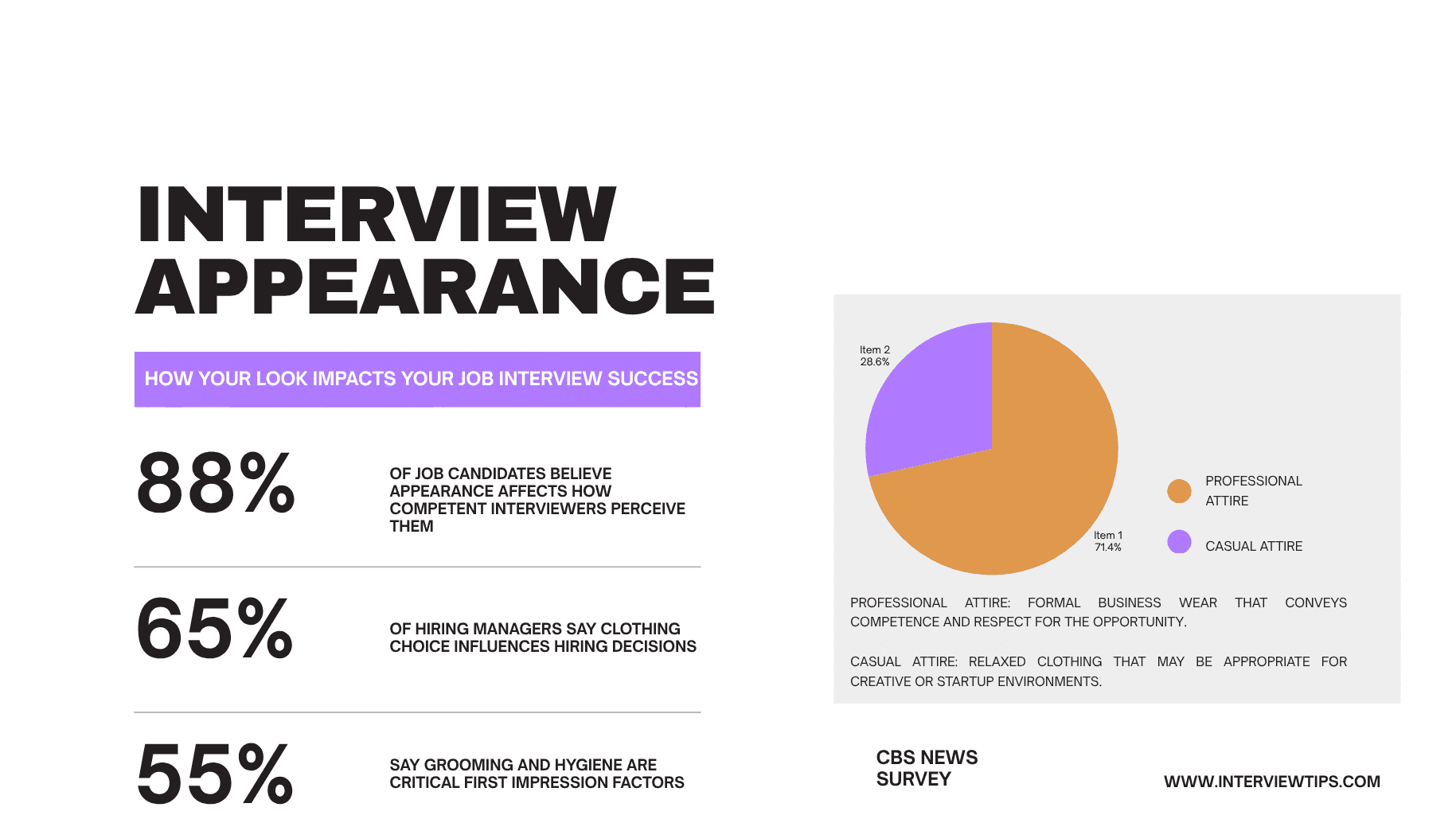
According to a CBS News survey, 88% of job candidates believed their appearance during an interview could influence how competent an interviewer perceived them to be.
Dr Karen argues that structured, tailored clothing still triggers assumptions about competence.
“People tend to believe that the more minimal, tailored, and structured an outfit is, the less distracted and less egotistical the wearer will be when performing a task. This is an unconscious bias, not a conscious judgment,” she says. “The more you conform, the more competent you appear.”
Fair? Not necessarily. But ingrained after years of workplace conditioning? Most definitely.
These undoubtedly ‘rules’ exist; who they’re toughest on is another story.
Dr Karen suggests that women, who tend to have more clothing options, face scrutiny that men largely avoid.
“If we stick to the same outfit repeatedly, we risk being judged,” she says.
Friedman is less convinced.
“I think men have as much pressure on them when it comes to dress, I just don’t think they talk about it as much,” she says.
It gets more complicated when you factor in other characteristics; Dr Karen finds that professional appearance is not judged equally across all groups.
“Depending on your race or culture, you may not have the luxury of simply choosing an outfit and moving on. You must have second, third, and fourth thoughts about how you will be perceived at work, on the way to work, and leaving work,” she says. “People from dominant cultures do not face this same level of criticism.”
The real question is whether workplaces have become more accommodating of individual expression than they were decades ago.
“There’s a tension between dressing to represent yourself as an individual, and dressing to represent the company or institution for which you work. I think the whole balance of power between the individual and the institution has shifted in favour of the individual,” Friedman says. “The ways that we express ourselves, personally, when it comes to dress, have become more permissible, because our understanding of how dress codes function at work has changed. It used to be that the institution took preference over the individual, which has now flipped; the institutions are expected to accommodate individuals.”