

I’d rather be screamed at and called every name under the sun than have to deal with one more minute of covert hostility.
It’s no secret that we don’t always get along with our co-workers – some are too loud, some too quiet, some we just don’t mesh with.
According to a 2024 Gallup workplace study, roughly half of all employees have experienced conflict with a colleague.
While we could act like fucking adults when an issue arises, that rarely happens.
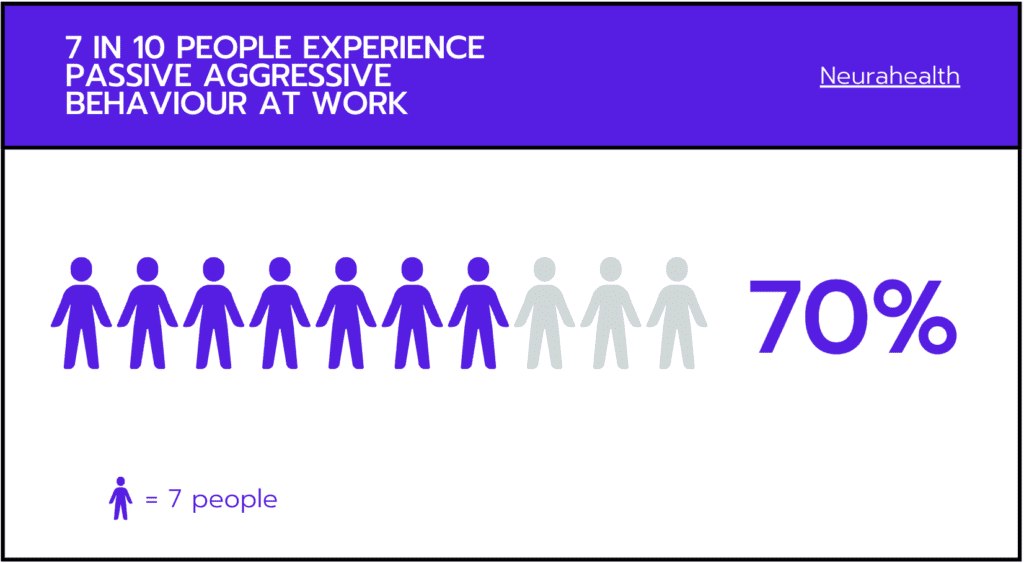
Neurahealth found that 7 in 10 workers are facing unprecedented levels of passive aggression at work, with one in five women, in particular, experiencing it daily.
We tend to hear a lot about snide comments or intentional knocks on our confidence, but it’s the avoidance of eye contact and dirty looks that can hurt more.
Being called a bitch or told off to HR may feel shitty in the moment, but it’ll also pave the way to a clear resolution.
And if not? It’s a chance for you to learn that the things you do, even if you don’t always realise it, can hurt others.
Gillian O’Gorman is a burnout coach and workplace facilitator who supports teams and organisations on conflict resolution, communication and psychological safety.
Based in Cork, Ireland, she is also the founder of The Burnout Coach and has featured in The Irish Times and Women’s Way.
“Covert hostility is passive-aggressive behaviour that can manifest as hot and cold treatment, refusal to engage or rudeness that’s never quite explicit enough to call out,” she says. “I’ve worked with several workplaces where this is an issue; it’s more prevalent in these environments because we’re spending 40 to 50 hours a week with people we didn’t choose, whose values may not align with ours, and where direct conflict carries professional risk.”
Most of the time, you can’t tell if you’re going batshit crazy, picking up on energy that may or may not be there, or if you’ve actually done something wrong – and it’s exhausting.
“The ambiguity makes it more draining. We tend to gaslight ourselves at times and start asking questions like, ‘Am I imagining this?, Am I being too sensitive? Am I being too much?’ That self-doubt rattles our confidence and pulls focus away from the job,” she says. “When you’re dealing with this kind of hostility, your energy is constantly depleted – you become fixated. Their failure to express their anger clearly can leave you stuck – trying to please them or rehearsing conversations in your head that never actually happen.”
The second-guessing and replaying every interaction takes a massive toll.

“The lack of clarity can really wear you down. You start to feel activated before you’re even in the workplace. You’re in the shower in the morning, thinking about how to manage the relationship rather than your 10 am meeting. Your nervous system is screaming: we are not safe,” she says. “When someone’s behaviour makes you feel like you’re constantly getting things wrong, like you have to do or be more, you start pushing beyond your capacity without knowing why. It leads to chronic stress that affects sleep, mental health, and digestion.”
Tolerance turns into a frustration that festers until it boils over; at some point, the dynamic goes from bearable to miserable, and the idea of heading into work on a Monday morning makes your stomach churn.
Of course, there’s always the question of: why not just reach out and resolve things?
Sometimes, after what probably feels like years of being the proverbial punching bag for another person’s every shitty day or last-minute deadline, you don’t have it in you.
But, as they say, communication is king (though we’d prefer queen).
“When you’re dealing with a difficult person, at work – definitely seek help, name it, try to find some kind of mediation, something where there can be a code of conduct or rules of engagement to follow,” says O’Gorman. “But if the issue persists, or they don’t respond to your efforts, then it may be time to put emotional boundaries in place. So often, people fear boundaries because they associate them with confrontation, but some of the most powerful boundaries you can implement are silent, removing yourself from their orbit quietly; it allows for self-validation and emotional distance that prevents further personalisation of others’ actions, behaviours, and thoughts.”
Choosing to do this may make you the villain in their story, but the way I see it, your peace will always be worth a false narrative.
On a day-to-day basis, there are concrete ways to cope.
“The first thing is naming it. Acknowledge what you’re feeling instead of listening to the noise in your head saying you’re paranoid or responsible for fixing things. Journaling is also powerful. A few prompts you can use: What am I trying to solve? What am I fearful of? It makes the passive aggression tangible and less daunting,” says O’Gorman. “I’d also recommend identifying your safe space; this can be the friends you see after work, or a place where you can go during your lunch break to decompress, it’s a reprieve from the toxicity.”
If you’re currently putting up with this bullshit at work, know you’re not crazy.
Though from the outside the co-worker in question has done absolutely nothing wrong – never raised their voice or made a scene – the constant uncertainty, tight chest and sweaty palms they leave you with isn’t normal.
The tension that rots beneath their constant performance is all too real – so don’t let anyone, yourself included, convince you otherwise.