
There’s something deeply optimistic about buying sleep gummies in an airport. Especially when you’re exhausted, mildly dehydrated, and emotionally fragile from paying £8 for a bottle of water.
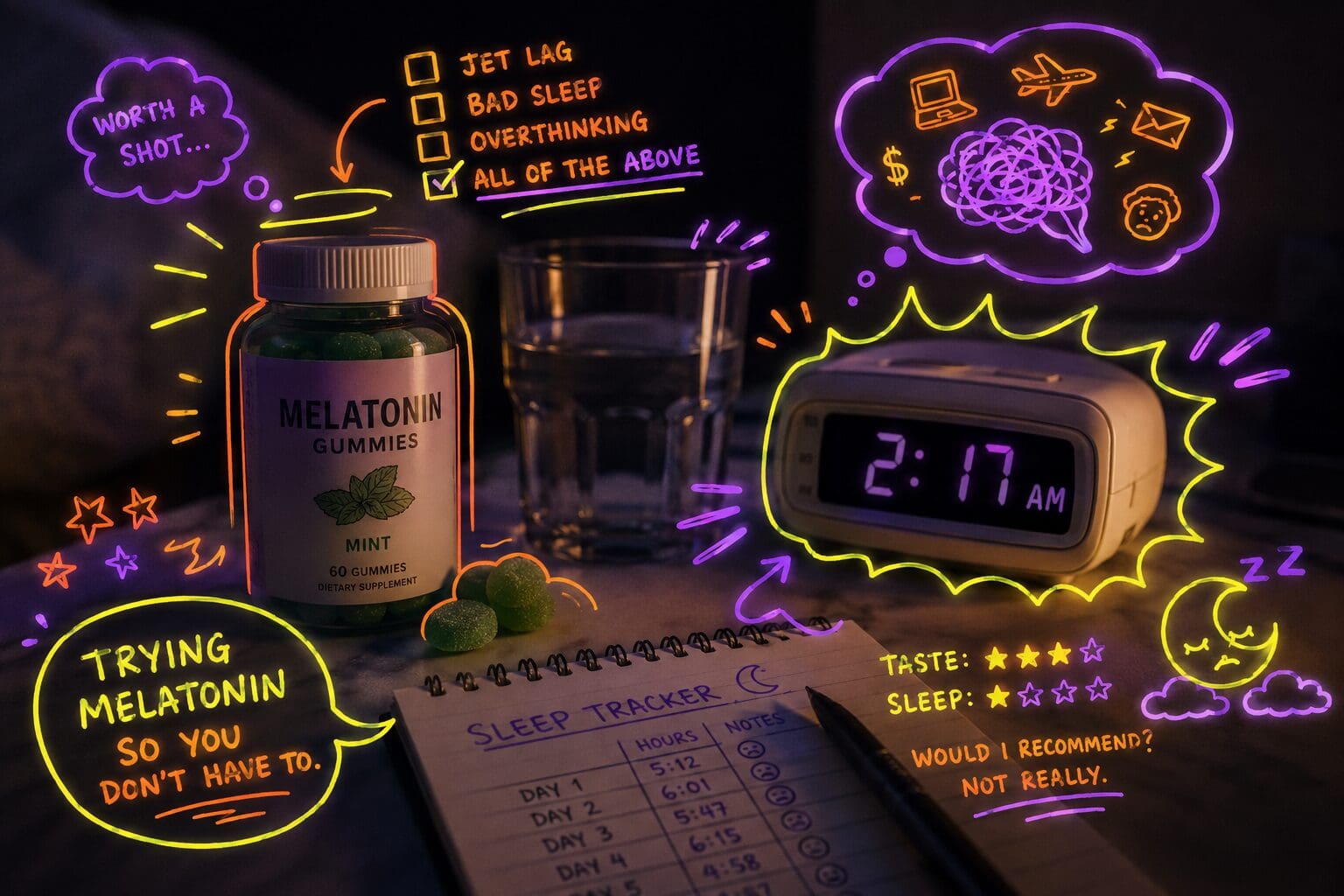
Over a year ago, while stranded in Budapest airport, I bought a packet of mint-flavoured melatonin gummies from one of those aggressively bright pharmacy shops that sell neck pillows, vitamins, and vague promises of wellness. At the time, I convinced myself they were going to change my life.
And then… I never took them.
For an entire year, those gummies sat in a drawer watching me ruin my sleep schedule naturally. Occasionally I’d see them while looking for a charger and think, “tonight’s the night”. It never was. Until now.
Melatonin is a hormone your body naturally produces to help regulate sleep. Your brain releases it in response to darkness, basically whispering “Alright mate, time to shut it down”. Supplements are supposed to help nudge your body into sleep mode faster, especially if your sleep schedule is off.
In theory, melatonin gummies should help you drift peacefully into restorative sleep.
In practice?
Well.
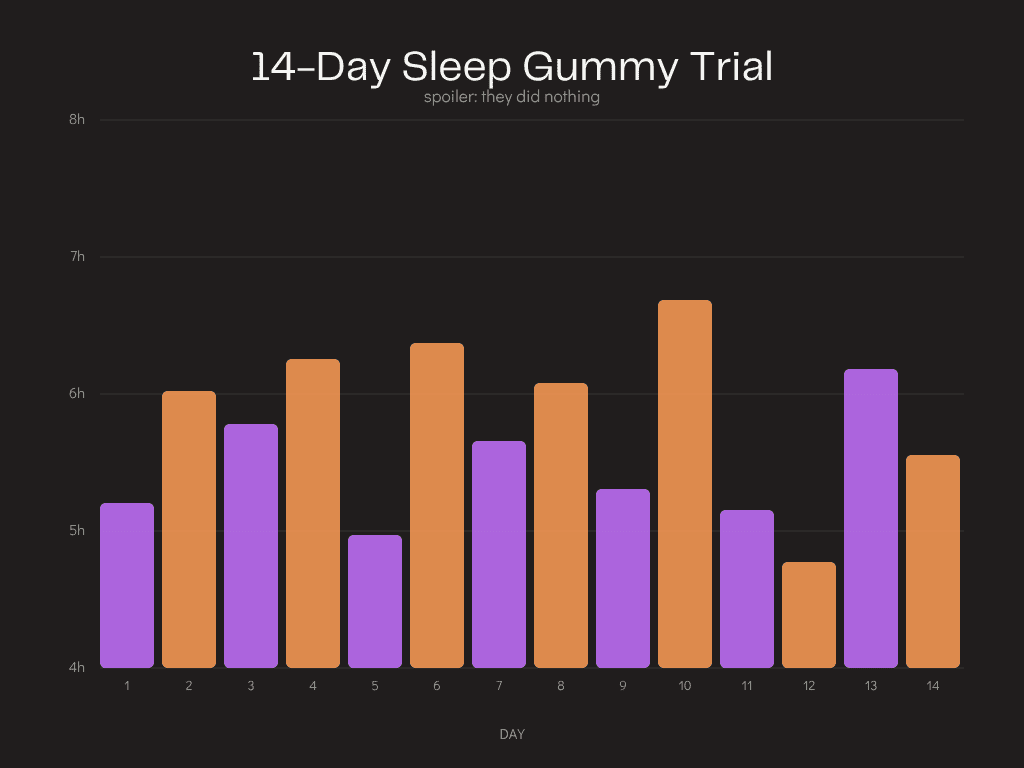
By day four, taking the gummy had become an event. Lights dimmed. Phone face down. Mint gummy consumed with the seriousness of prescription medication despite tasting like something offered at reception in a spa.
I started saying things like, “I’m really focusing on my sleep lately,” which is the kind of sentence that should legally require a beige matching loungewear set and a matcha.
Meanwhile, my actual sleep remained utter and complete bullshit.
I still woke up repeatedly throughout the night, except now I got to wake up with a faint minty aftertaste. Luxury.
A week in, I was desperately trying to identify literally any positive effect.
“I think I fell asleep slightly faster?” I told myself, after spending 40 minutes staring at the ceiling contemplating every embarrassing interaction I’ve had since Year 9.
The problem with melatonin gummies is that once you take them, you suddenly become hyper-aware of sleep. Every blink feels like data collection.
I took my first gummy at 10 p.m. and immediately felt smug. This, I thought, is what people with their lives together do.
The gummy itself tasted like toothpaste pretending to be a sweet. Weirdly pleasant. Like chewing gum that had aspirations.
Thirty minutes later, I was lying in bed trying to “feel sleepy” manually, which is a guaranteed way to stay aggressively awake.
At one point I became convinced the melatonin was working because my eyelids felt heavy. Turns out that was just because it was 3am.
Sleep quality: questionable.
Dreams: fucking unhinged.
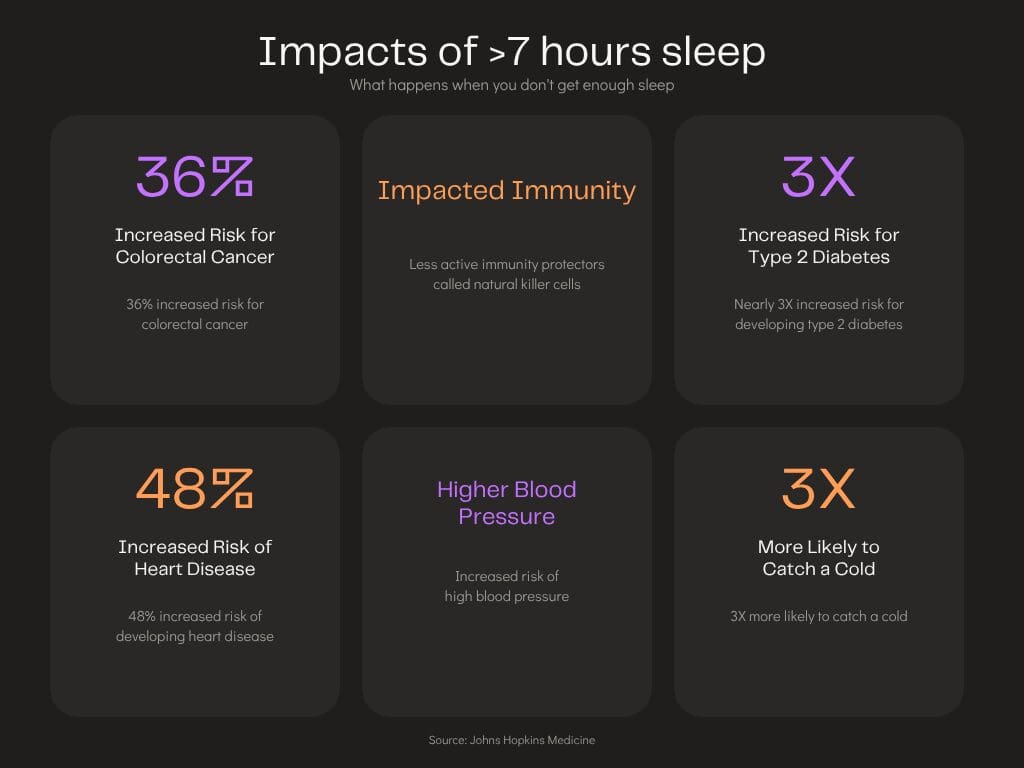
The gummies continued tasting fantastic, which honestly felt manipulative. If something’s ineffective, it should at least taste medicinal enough to punish you for believing in it.
By day ten, I had gone full sleep scientist. No caffeine after 8pm. No doomscrolling in bed. No overhead lights. I practically turned my bedroom into a Scandinavian sleep laboratory.
And still – STILL – I was awake at 2 a.m. thinking about conversations from 2017 that nobody else remembers.
At this point, the melatonin gummies had become less of a supplement and more of a tiny mint-flavoured emotional support ritual.
Did they make me sleepy? Not really.
Did they make me feel like I was at least trying to fix my life? Temporarily.
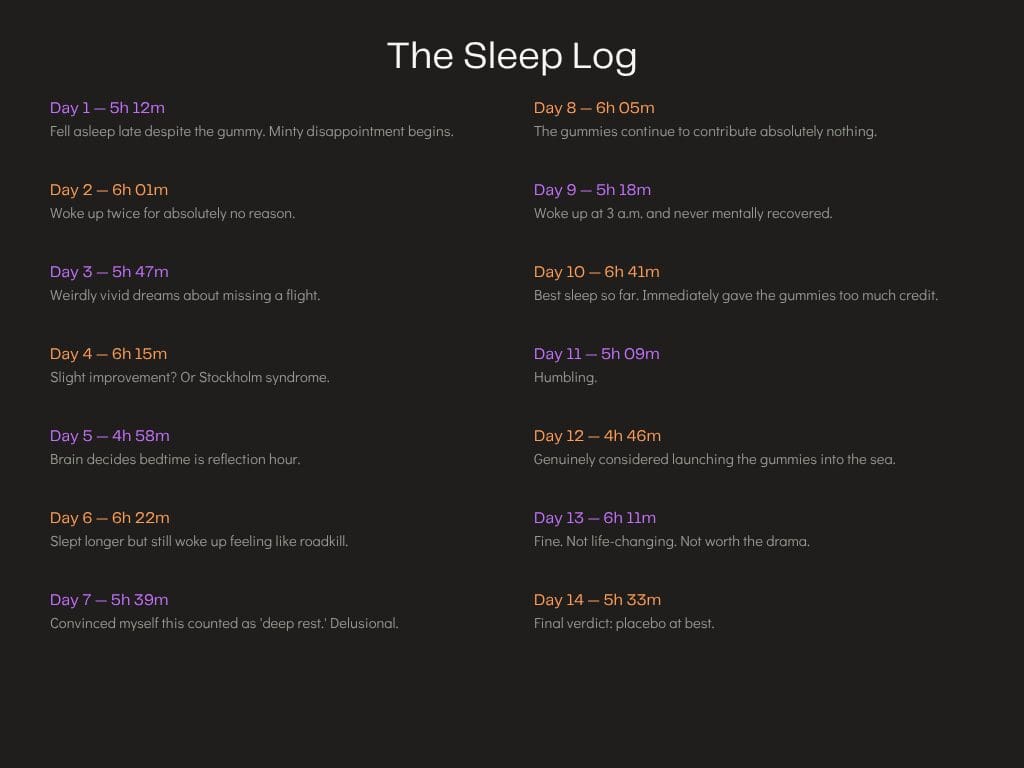
Two weeks later, I can confidently say the melatonin gummies did absolutely fuck all for my sleep.
I was still tossing, turning, overheating, overthinking, and waking up exhausted like a Victorian orphan forced to work in a chimney.
To be fair, melatonin does work for some people, especially for jet lag or messed-up sleep schedules. But for me, these gummies mostly provided minty breath and false hope.
Honestly, the most effective thing about them was the placebo effect during the first three days when I convinced myself I was becoming the kind of person who “winds down properly at night.”
I wasn’t.
The gummies are now back in the drawer where they belong, waiting patiently for the next time I decide to briefly reinvent myself.