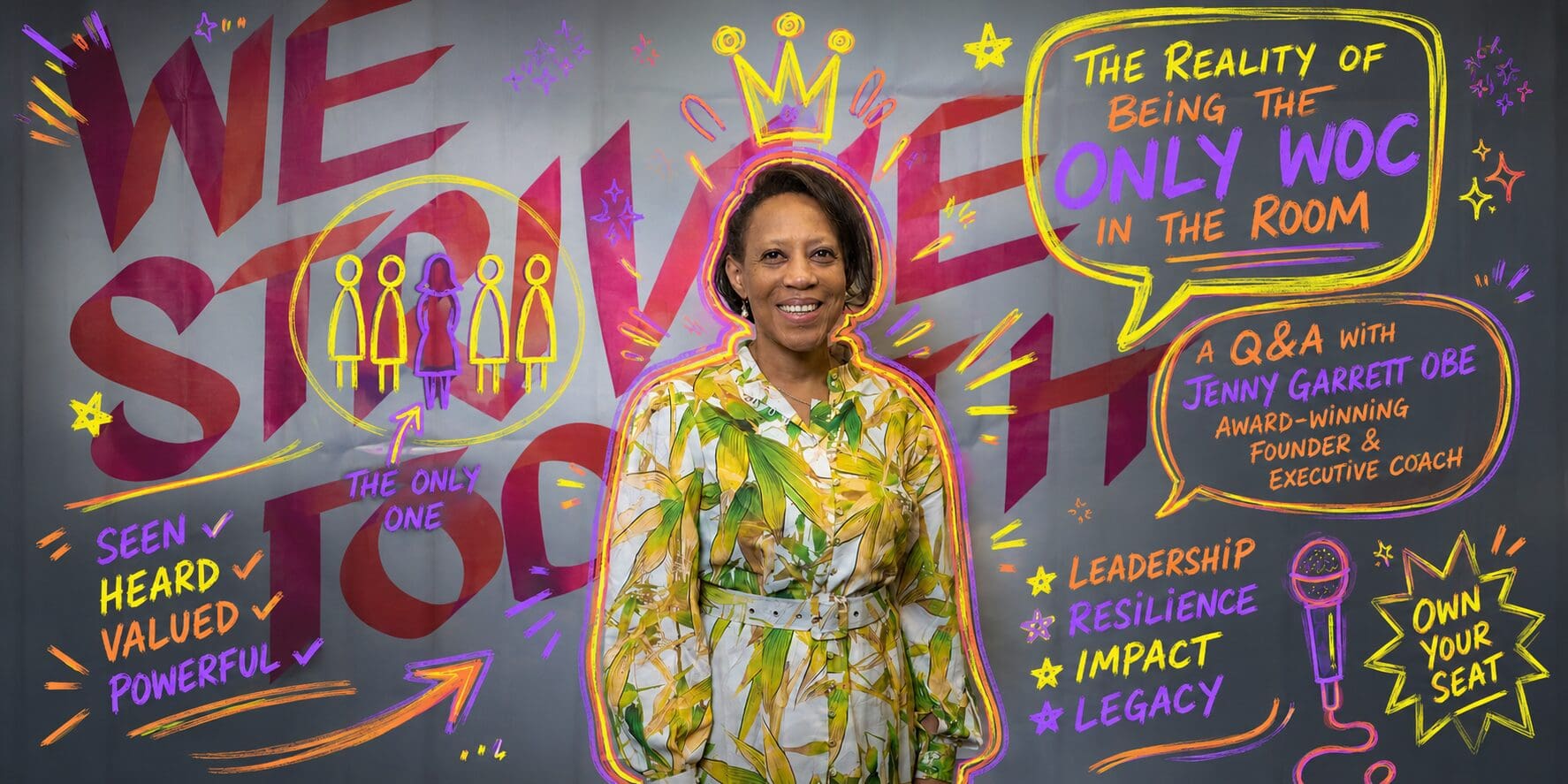

Jenny Garrett OBE knows what it’s like to have to work a million times harder than most.
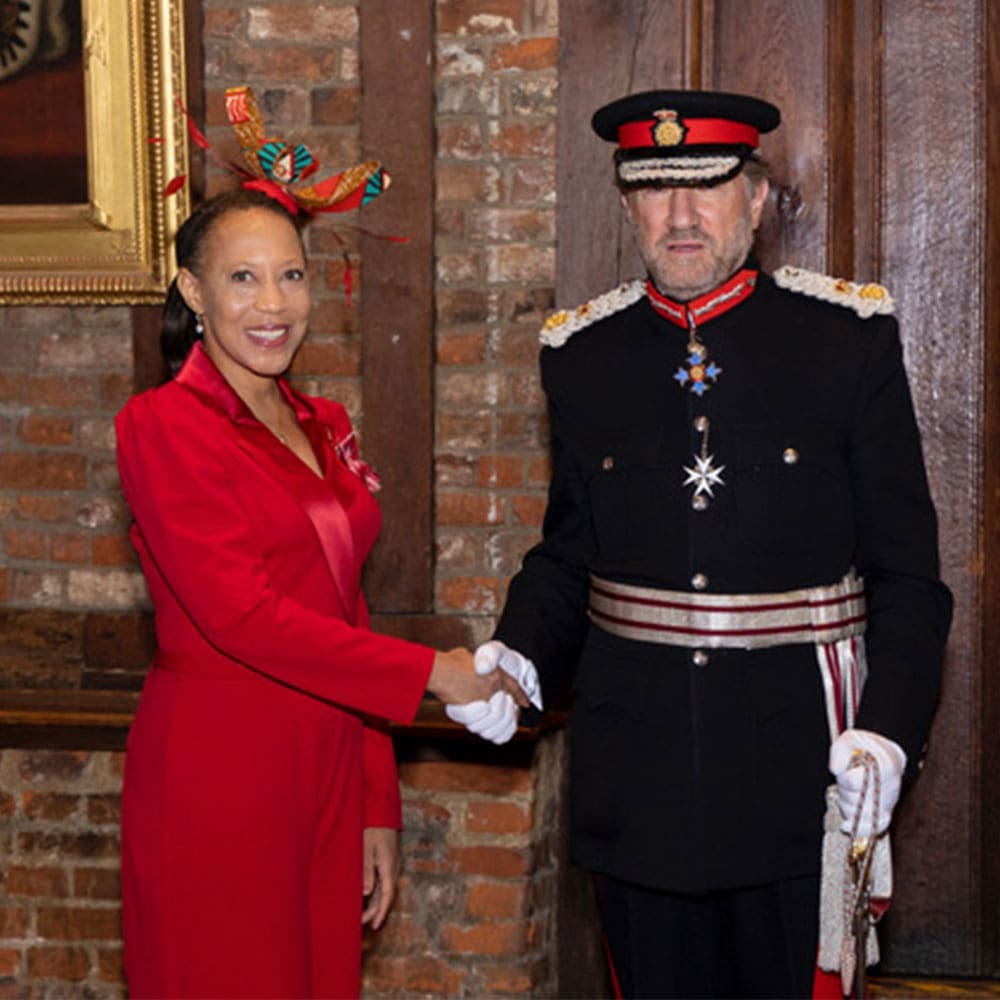
Recipient of a Diversity Powerlist Award, an OBE for her contributions to women in business, two bestselling books, two TEDx talks, clients including Mastercard and the NHS, audiences across six continents, and the founder of the UK’s first (and only) Diverse Executive Coach Directory – reaching over 122 million people worldwide.
She got there through a hell of a lot of hard work and is determined to help other women of colour (WOC) in the working world develop the confidence and wisdom she’s spent a career building.
What are the expectations that come with being the only WOC in a professional space that nobody really prepares you for?
There’s an absolute weight of responsibility – not stepping outside the norms of being socially acceptable, assimilating, code-switching and contorting yourself to fit in. There are all these opinions about who you are, what you are, and what you’re capable of – it can be incredibly draining.
How do WOC navigate this?
A saying I have is: no one is you, and that is your power. We shouldn’t internalise other people’s behaviour; more often than not, it’s about them, not us.
Someone once told me that every time she spoke in a board meeting, a colleague would squint at her. She started thinking, ‘Am I not articulate? Am I not speaking clearly?’ It was much more about that person just not being used to an unfamiliar accent.
Another woman shared that she always felt she took longer to write reports because she’d translate from English into her first language and back again, which made her feel less capable. But the feedback was that they were brilliant.
So, it’s really important to remember what you bring, how unique you are, and how your individualism is a strength.
Do you think it goes beyond perception – that WOC often have to absorb external microaggressions in silence, day after day?
Definitely, people are constantly implying to you that you don’t really belong.
Comparing where they live to where you live, where were they educated compared to where you were educated? Then come the little comments: Can they touch your hair? What do you eat? Where do you holiday? Someone assumes you’re the least senior person in the room, when you might actually be the most senior.
All of this is constantly eroding and exhausting, and you have to push back against it all with a big smile on your face. It’s really, really difficult.
What does carrying that actually cost?
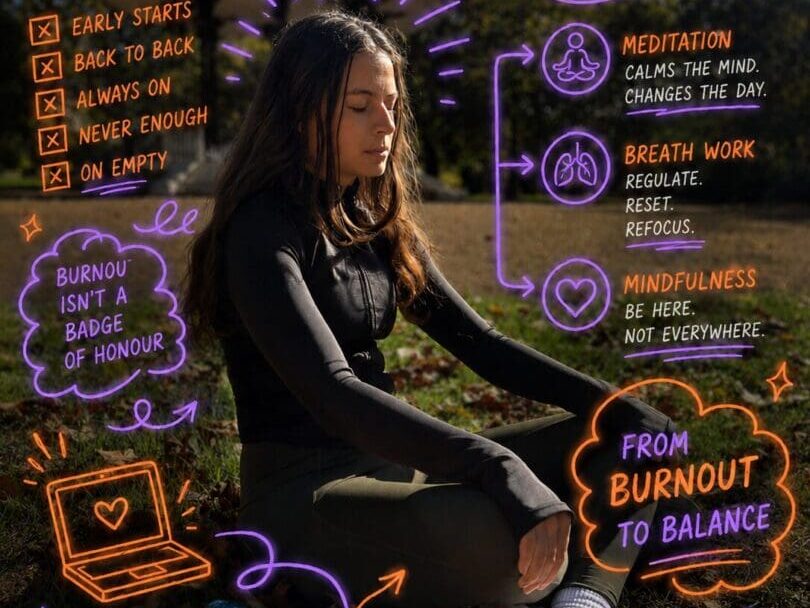
There is a name for what that does. It’s called self-silencing – biting your tongue, holding back feelings, thoughts and actions to keep relationships intact. It’s also emotional inhibition: always being on guard, not feeling safe to show how you really feel for fear of disapproval or shame. Carried day after day, that leads to burnout.
Do you have any advice for how WOC can push back?
In practice, pushing back often looks like getting senior leaders on your side. It’s making sure you know who your advocates are and who can speak up for you. When you try to do it yourself, people can think you’ve got a chip on your shoulder or your own agenda. They say it’s a personality problem or that you’re imagining it.
Because you’re the only one, there’s no one to just lean on and say, did you see that? Did you experience it? Do you get it? That can make you feel there’s no safety in it, and no chance of stepping out and doing something different. But when other people see it – particularly when they’re in the majority group – that can really help.
I also think it’s about having a trusted group around you – people you can just be yourself with, be open with, and pour out to. People you can tell your full experience to, and feel safe doing it.
So few WOC have been given access to these spaces that the ones who arrive carry the weight of scarcity. Does that macro context matter?
Not only does it matter, I think it’s a big problem, and a big burden. They’re navigating these spaces where they feel that if they make one mistake, it affects everyone who looks like or might come after them. They feel they have to be bulletproof. They can be hyper-visible but also invisible for their successes, because those successes may be seen as the result of a tokenised hire.
Do you have any guidance on how to handle that?
Having a coach and having sponsors is really important. So is recognising that you will be critiqued much more than your colleagues. And it’s not just about keeping your head down and working hard. It’s about building networks inside and outside the organisation, because you never know what will change. I would say always, always, always evidence the difference you make. Constantly do that. It’s really important not to let other people sideline you if you can help it.
So much of this is placed on the individual woman to absorb. What should WOC actually be asking of their employers, and how do they have that conversation?
Something I want to call out about women of colour in particular, which I’ve experienced, is that we’ll work hard, and work hard, and not ask for more. So many times I’ve had clients who’ve been promoted, but no one’s replaced their old role. They’re doing the roles of several people. And to make it worse, they have ‘barrier bosses’ – managers who pretend to advocate for them, but keep them exactly where they are.
Knowing that sometimes people don’t really have your best interests at heart – they have their own interests, because you’re so good at your job – is something every woman of colour should know.
Well, when it comes to finding the right employer, what should WOC look for, and where should they start?
You need to find people who are inclusive – who accept you as you are. There is a chronic kind of niceness that can fool you. Always smiling, always warm, until you behave slightly differently. If people truly want you, they need to appreciate your directness and fullness, not overlay stereotypes, but take you as you are, knowing that it will enhance the organisation.
Where there is published data, look at it. The ethnicity pay gap, the gender pay gap. Check Glassdoor – who succeeds there and who doesn’t. Look for employee resource groups – whether they’ve seen it as important enough to actually have one, clear policies, and stated objectives. Look at performance management data – are women and people of colour represented there?
But here is what I will say – every one of those things asks the woman to do the detective work. To audit the employer before she has even been hired. That diligence is wise, and she should do it. But the burden is, once again, falling on her. The braver organisations are flipping this – publishing the data unprompted, making the audit their job to pass rather than hers to conduct. And know that you are entitled to ask, in an interview, what an employer is already doing to make that information visible.
For those on the outside looking in – colleagues, managers, organisations – what do you wish they understood?
So many people have never been in environments where they are in the minority, so they simply have no idea what that experience is like. Something I often do in my courses is help people remember a time they were in. Were you ever in a country with a different religion or way of life? Maybe you attended a celebration with people from a completely different background. How did you feel? Afraid of taking one wrong step. Wanting to fit in. Hyper-vigilant – not because people were unkind, but because you were aware of every move you made. Now think: some people are living that day in, day out.
For a woman of colour reading this who recognises herself in it, what is the most important thing you would want her to know?
You are not a problem. You don’t have to stay and have your confidence eroded by people who don’t understand you. You don’t have to accept how people judge you – it’s their judgment, it’s not yours. You do have allies, and you should network. There are women of colour who get you, who understand you, who validate your experience.
You are worthy. You are deserving. You are capable.
And you absolutely belong wherever you want to belong.